

Ramadan can be a good time to build healthier habits, but it can also leave you tired and, frustratingly, not lighter. The difference usually comes down to how you eat, drink, move and rest around the fast. This guide brings together practical, doctor-backed steps to help you lose weight during Ramadan while keeping your energy steady.
Yes, many people can lose weight in Ramadan by planning balanced suhoor and iftar meals, staying hydrated between fasts, keeping activity gentle but regular, and protecting sleep. Crash dieting tends to backfire and drains energy. For those on weight-loss medication, timing and supervision matter, so check with your specialist.
Fasting naturally creates a longer overnight period without food, which can support weight loss if the eating hours are managed well. The common mistake is treating iftar as a reward with large, rich, sugary meals, which can undo the benefit of the fast and cause your energy to rise and then fall sharply. Balance, rather than restriction to the point of exhaustion, is what produces results.
Why weight and energy change while fasting
During the fasting hours your body draws on stored energy, which is part of the reason fasting can aid weight loss. Energy dips, when they occur, come less from the fast itself and more from poor meal balance, dehydration and disrupted sleep. When these three are addressed, most people feel considerably better while still losing weight.
Building a balanced suhoor
Suhoor prepares you for the day, so it is worth planning carefully. Aim for a plate that keeps you full and steady for several hours rather than one that causes a rapid rise and fall in energy.
- Protein to sustain fullness, such as eggs, Greek yogurt, labneh, beans or cheese.
- Slow-release carbohydrates such as oats or wholegrain bread, rather than sugary cereals or pastries.
- Fiber from fruit and vegetables to slow digestion.
- Healthy fats such as nuts or olive oil.
Skipping suhoor is often counterproductive, leaving you hungrier and lower on energy throughout the day.
Smart iftar choices
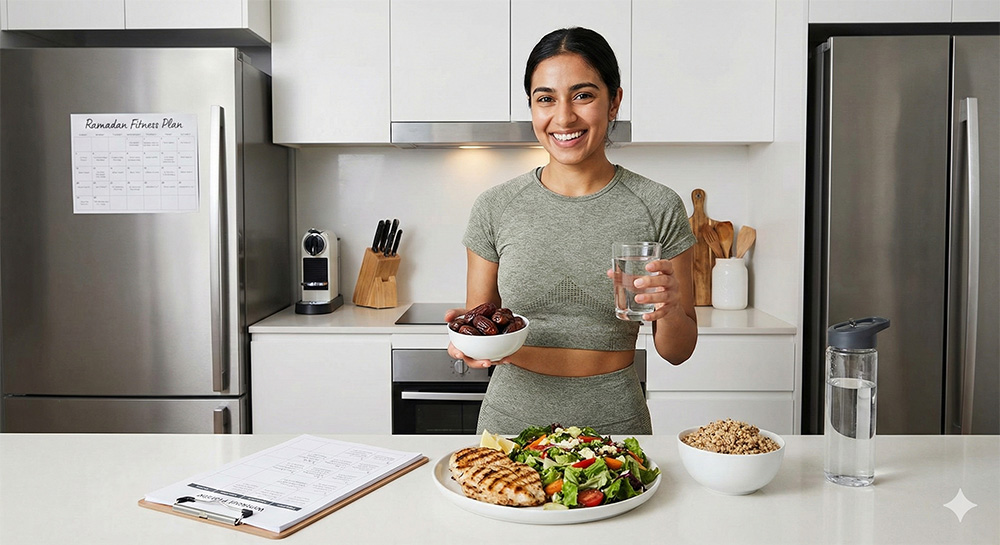
Break the fast gently, traditionally with a date and water, then pause before the main meal. That short gap lets your body register the food and helps you avoid overeating. For the meal itself, build a balanced plate: a palm-sized portion of protein, plenty of vegetables and a moderate portion of carbohydrate. Avoid fried items and sugary desserts, as these lead to blood sugar spikes. Eating slowly helps, because fullness signals take time to arrive.
Hydration in the UAE climate
Hydration is one of the most overlooked levers, especially in the UAE heat. Aim to drink steadily between iftar and suhoor rather than drinking large amounts at once. Water is the best choice. Limit sugary drinks and very salty foods that increase thirst, and be aware that a high caffeine intake can be dehydrating. Good hydration also reduces the headaches and fatigue that many people attribute to fasting itself.
Movement that does not exhaust you
You can remain active during Ramadan without exhausting yourself. Gentle, regular movement protects energy and helps preserve muscle. A walk after iftar, light activity, or a short resistance session two or three times a week after a meal works well for many people. Intense training on an empty stomach late in the fast is best avoided unless you know it suits you. Listen to your body and adjust activity levels according to how you feel.
Sleep and Ramadan
Sleep is often disrupted during Ramadan, and this matters for weight, because short or disrupted sleep can increase appetite and cravings the following day. Protect your rest where you can: keep a consistent routine, get some daylight, and consider a short nap if your schedule allows. When you sleep better, you are more likely to maintain healthy eating habits and stay physically active.
Common mistakes that stall weight loss
A few common patterns undermine progress.
- Treating iftar as a feast of fried and sugary foods.
- Skipping suhoor, then overeating later.
- Under-hydrating during the eating window.
- Too little movement across the whole month.
- Pursuing very fast results through extreme restriction, which drains energy and rarely lasts.
Weight-loss medication and fasting
If you take weight-loss medication, Ramadan raises practical questions that are worth discussing with your specialist. GLP-1 injections are taken under the skin and do not involve food, so they do not break the fast, but the timing of your dose and how it fits the fasting schedule should be confirmed with your doctor. People with diabetes or other conditions need individual advice before fasting, as medication and meal timing may need adjusting. For more on this, see Endocare’s guide to weight-loss injections during Ramadan.
How Endocare supports you
A small amount of planning makes a significant difference, and you do not have to do it alone. Endocare’s lifestyle coaches can build a Ramadan plan around your routine, your preferences and your goals, coordinated with your specialist if you are on medication. Coaching covers nutrition, activity, sleep and stress, the same pillars that drive results year-round, adapted to the fasting month. The aim is sustainable progress with your energy intact, as part of a doctor-supervised medical weight loss program.
Frequently asked questions
Can you lose weight in Ramadan?
Many people can. The fasting hours create a longer overnight period that can support weight loss, provided suhoor and iftar are balanced, hydration is good, and sleep and activity are protected. Crash dieting tends to be counterproductive.
What should I eat at suhoor to lose weight?
A balanced plate that sustains you: protein such as eggs or yogurt, slow-release carbohydrates such as oats, fiber from fruit and vegetables, and some healthy fats. This keeps you fuller and steadier than sugary or refined foods.
How do I avoid fatigue while fasting?
Fatigue mostly comes from poor meal balance, dehydration and disrupted sleep rather than from the fast itself. Balanced meals, steady hydration between fasts, gentle activity and protected sleep usually make a considerable difference.
Do weight-loss injections break the fast?
GLP-1 injections are given under the skin and do not involve food, so they do not break the fast. The timing of your dose during Ramadan should be confirmed with your specialist, and anyone with diabetes needs individual advice before fasting.
How much weight can I lose in Ramadan?
It varies from person to person, and no single figure can be promised. A steady, balanced approach that protects your energy is more sustainable, and more likely to last beyond the month, than pursuing rapid loss.
If you want to lose weight this Ramadan without running out of energy, a tailored plan makes it considerably easier. Endocare’s lifestyle coaches in Dubai and Abu Dhabi can shape your suhoor, iftar, hydration, movement and sleep around your routine, and coordinate with your specialist if you are on medication. To get a plan or ask about fasting and medication timing, call our Dubai clinic on +971 4 285 3885, our Abu Dhabi clinic on +971 2 582 6178, or send us a message on WhatsApp.
