

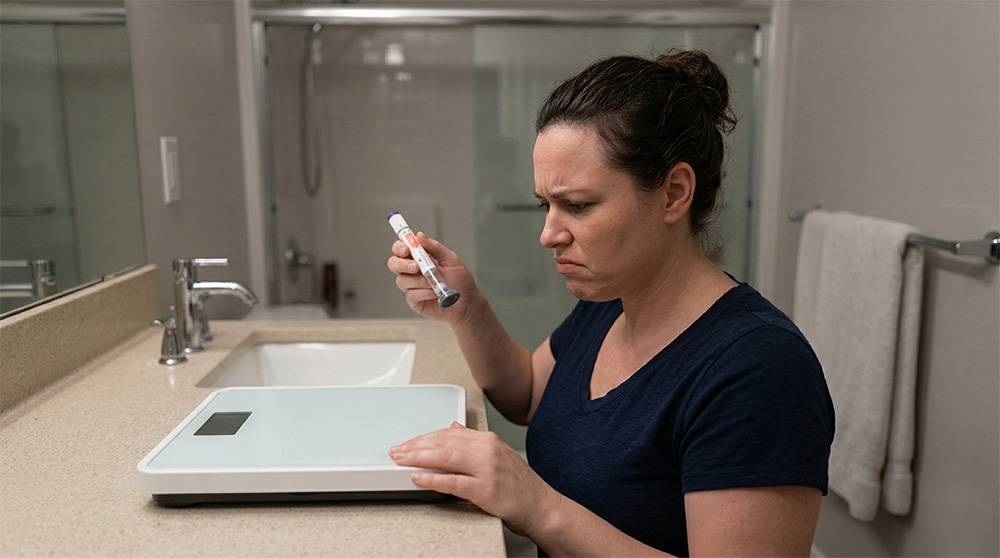
Many patients begin Mounjaro expecting steady weight loss, so it can feel frustrating when the scale does not change as quickly as expected.
If you are asking why am I not losing weight on Mounjaro?, you are not alone, this is one of the most common questions doctors hear during follow-up visits.
Response to tirzepatide varies between individuals.
Some people notice appetite reduction and weight changes relatively early, while others need to reach a higher dose before the medication produces its full effect.
Differences in metabolism, lifestyle habits, and dosing stage all influence how quickly results appear.
Slower progress does not automatically mean the treatment is ineffective. In many cases, weight loss builds gradually over time as the dose increases and lifestyle adjustments begin to support the medication’s effects.
This article explains how Mounjaro works, why weight loss may slow or stall, and when it may be useful to review treatment with your doctor.
How Mounjaro supports weight loss
Mounjaro contains tirzepatide, a medication that acts on two hormonal pathways, GIP and GLP-1, which influence appetite, satiety, and metabolic regulation.
By affecting these signals, the medication helps many patients feel fuller with smaller meals. As hunger decreases, people often reduce calorie intake naturally without relying on extreme dieting.
Weight reduction with Mounjaro typically develops progressively rather than immediately. The medication works best when the body has time to adapt and the dose reaches a level where appetite regulation becomes more consistent.
Some patients notice strong appetite suppression early in treatment. Others require gradual dose increases before the medication produces noticeable changes in eating patterns and weight. This difference in response is expected and does not necessarily indicate a problem with the treatment.
Common reasons weight loss slows or stalls
Weight loss on Mounjaro can vary from person to person. When progress slows, it is usually linked to identifiable factors rather than the medication failing.
Early dose stage
Many patients start on lower doses before gradually increasing. People asking, ‘why am I not losing weight on Mounjaro 2.5mg first week’ may simply be at a stage where the medication has not yet reached its full effect.
Injection consistency
Irregular or missed injections can disrupt the medication’s weekly cycle and reduce its impact on appetite regulation.
Hidden calorie intake
Even with reduced hunger, calorie intake can remain higher than expected. Liquid calories, frequent snacking, or larger portions can offset the deficit needed for fat loss.
Low protein intake
Insufficient protein may reduce satiety and increase the likelihood of losing muscle rather than body fat.
Reduced physical activity
Lower daily movement or lack of resistance training can slow progress, as muscle mass plays an important role in metabolic health.
Sleep and stress factors
Poor sleep and chronic stress can disrupt appetite hormones and influence eating behaviour.
Normal weight fluctuations
Short-term changes on the scale may reflect water retention or hormonal shifts rather than true fat gain, which can temporarily mask progress.
When to seek medical review
If weight loss on Mounjaro slows significantly or stops for an extended period, it may be useful to review treatment with a doctor.
Persistent plateau
If the scale has not moved for several weeks despite consistent medication use and lifestyle effort, a clinical review may help identify the reason.
Significant side effects
Symptoms such as persistent nausea, vomiting, or difficulty maintaining hydration should be discussed with a doctor.
Underlying health conditions
Medical issues such as thyroid disorders, insulin resistance, or hormonal imbalances may influence how the body responds to treatment.
Medication interactions
Certain medications can affect metabolism or appetite and may interfere with weight-loss progress.
During a consultation, specialists typically review three areas: medical factors, lifestyle habits, and whether a treatment adjustment, including dose modification or alternative weight loss treatments, may be appropriate.
True non-response to tirzepatide is uncommon. In most cases, slow progress can be explained and addressed with the right adjustments.
What you can do now
If weight loss feels slower than expected, several practical steps can help support progress while continuing treatment.
Prioritise protein
Meals built around protein can improve satiety and help maintain lean muscle during weight loss.
Include strength training
Resistance exercises two to three times per week help preserve muscle mass and support metabolic health.
Improve sleep and stress management
Consistent sleep and reduced stress help stabilise appetite hormones and improve adherence to nutrition habits.
Track progress beyond the scale
Changes in body composition often reflect meaningful progress, even when scale weight appears stable. Fat mass may decrease while lean muscle is preserved or increased, particularly when resistance training and adequate protein intake are maintained. This can result in improved metabolic health and body composition without large changes in total body weight.
Follow medical guidance
Dose adjustments should always be discussed with a doctor. Regular follow-up appointments are where treatment plans are refined.
Why choose Endocare Clinic?
At Endocare Clinic, weight management is led by experienced endocrinology specialists who focus on metabolic health rather than short-term dieting.
Treatment plans are personalised. Dose adjustments for medications such as Mounjaro, Ozempic, or Wegovy are based on each patient’s response rather than a fixed protocol.
Patients also receive integrated guidance across nutrition, physical activity, sleep, and stress management to support long-term outcomes.
Progress is monitored through structured follow-up appointments, which may include blood tests, body composition assessment, and medical review.
If Mounjaro is not producing the expected results, the team evaluates possible reasons and discusses appropriate adjustments, including alternative therapies when necessary.
Conclusion
If you are wondering why am I not losing weight on Mounjaro, slower progress is common and usually reflects factors such as dosing stage, lifestyle habits, or individual metabolic response.
In most cases, weight-loss plateaus have identifiable causes and can be addressed through treatment adjustments, lifestyle changes, and regular medical follow-up.
Frequently asked questions
How long should I wait before expecting results on Mounjaro?
Most patients begin noticing appetite changes within the first few weeks. However, visible weight loss typically becomes clearer as the dose is gradually increased over the first 2–3 months. Early progress may not always be reflected on the scale, as improvements in energy levels or body composition can occur first. Consistency with both medication and lifestyle habits plays a key role in how quickly results develop.
Is it normal if I am not losing weight on Mounjaro 5mg or 10mg?
Yes, this can be normal. Mounjaro is designed to be titrated gradually, and many patients do not experience their strongest response until reaching a higher maintenance dose. At 5mg or 10mg, the medication may already be reducing appetite, but larger changes in weight may take more time. A doctor will assess your progress and may adjust the dose based on your tolerance and overall response.
Why am I not losing weight on Mounjaro in a calorie deficit?
A calorie deficit is necessary for fat loss, but several factors can influence how the body responds. Inadequate protein intake, poor sleep, elevated stress, or underlying conditions such as insulin resistance or thyroid dysfunction can all slow visible progress, even when calories are controlled. If weight loss has stalled despite consistent effort, a clinical review can help identify whether metabolic or hormonal factors are affecting results.
Not losing weight on Mounjaro after 3 months, should I be concerned?
Not necessarily, but it is worth reviewing your progress with a doctor. By three months, most patients have usually gone through one or two dose increases and should notice some level of change, whether in appetite, measurements, or weight. If there has been no noticeable progress at all, a clinical review can help assess whether a dose adjustment, lifestyle modification, or further investigation into metabolic factors is needed.
Why am I gaining weight on Mounjaro as a female?
Short-term weight increases during treatment are not uncommon and are often linked to fluid retention, hormonal fluctuations during the menstrual cycle, or shifts in body composition. In some cases, muscle mass may be maintained or increased while fat mass is gradually reduced, which can temporarily raise scale weight even when fat loss is occurring. Tracking body measurements and composition alongside weight provides a more accurate view of progress.
Should I increase my dose if weight loss has stalled?
Dose adjustments should always be made under medical supervision. Increasing the dose may be an option, but a doctor will first evaluate whether other factors such as nutrition, activity levels, sleep, side effects, or underlying conditions are contributing to the plateau. In some cases, improving these factors can lead to better results without needing a dose increase.
