

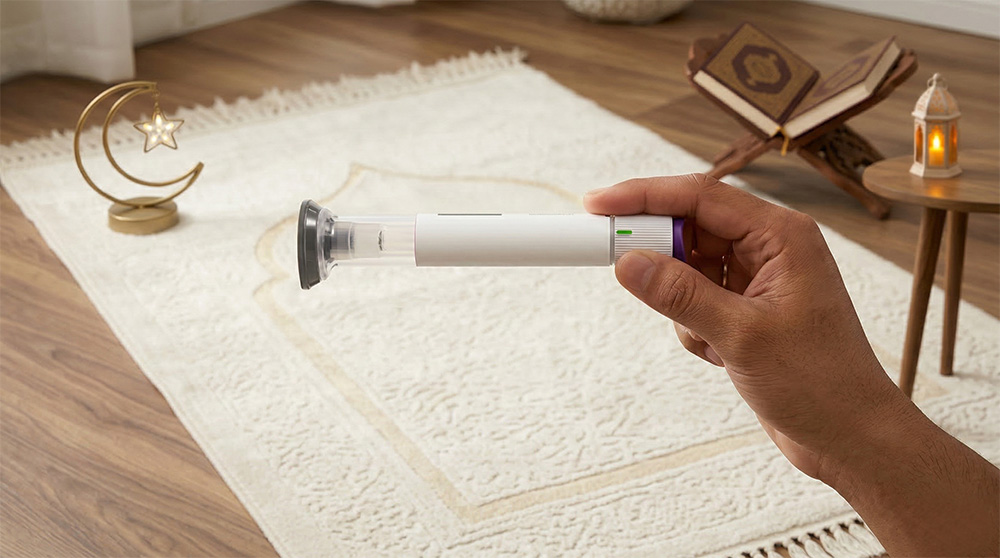
Yes. Weight loss injections such as GLP-1 medications including Ozempic, Wegovy, and Mounjaro can generally be used during Ramadan without invalidating the fast. Because these injections do not provide nutrition through the digestive system, they are usually treated as non-nutritive medications taken while fasting.
For patients already established on treatment, the appetite-regulating effects of GLP-1 therapy may actually support fasting by reducing daytime hunger and helping control portion sizes at Iftar. However, fasting changes hydration patterns, meal timing, and digestive tolerance, which means treatment should be approached with some planning.
This article explains how GLP-1 therapy can be managed during Ramadan, the best time to take GLP-1 injection in Ramadan, and how common questions such as can I take an injection while fasting in Ramadan or is Ozempic halal in Ramadan are typically addressed.
Why GLP-1 medications can support fasting during Ramadan
For patients already established on GLP-1 therapy, fasting during Ramadan does not necessarily conflict with treatment. In some cases, the medication’s appetite-regulating effects align well with the structured eating pattern of the month.
GLP-1 medications work by slowing gastric emptying and influencing appetite signals in the brain. As a result, many patients experience reduced hunger during the day. During Ramadan, this effect can make the long fasting hours more manageable by lowering the intensity of daytime hunger.
Another practical benefit appears at Iftar. Weight gain during Ramadan commonly occurs when large meals are eaten quickly after a full day of fasting. Appetite suppression can help moderate portion sizes, making it easier for patients to stop eating once comfortable rather than continuing out of habit.
For individuals already progressing on treatment, the structured eating window of Ramadan may reinforce dietary consistency. Some patients therefore continue to lose weight during the month when meal composition and hydration are managed appropriately.
However, medication alone does not determine outcomes. Wegovy, Mounjaro or Ozempic while fasting are tolerated best when Iftar meals are balanced, protein intake is adequate, and hydration is maintained between sunset and Suhoor.
How to manage GLP-1 treatment during Ramadan
For most patients already established on treatment, GLP-1 therapy can continue during Ramadan without major adjustment. The key is adapting medication timing, meal structure, and hydration habits to the fasting schedule.
Injection timing
GLP-1 medications such as Ozempic, Wegovy, and Mounjaro are usually taken once per week. During Ramadan, the best time to take GLP-1 injection in Ramadan is often in the evening after Iftar, when food and fluids are available and digestive tolerance is easier to monitor.
Maintaining the same weekly dosing day is generally recommended to keep medication levels stable.
Eat carefully at iftar
The fasting period itself is rarely the main challenge. Problems usually arise from how the fast is broken. Large, heavy meals eaten quickly at Iftar can worsen the digestive effects already associated with GLP-1 medications, including nausea, bloating, and reflux.
A better approach is to begin Iftar with light foods such as water, dates, or soup, then move gradually to a balanced meal. Eating slowly allows appetite signals to catch up with intake, which helps prevent overeating.
Meals that prioritise protein, vegetables, and moderate portions of carbohydrates tend to be better tolerated than fried or highly processed foods.
Do not skip suhoor
Because GLP-1 medications reduce appetite, some patients feel less motivated to eat before the fast begins. Skipping Suhoor, however, often leads to fatigue, weakness, and inadequate daily nutrition.
A small but protein-rich Suhoor, for example eggs, yoghurt, nuts, or other balanced foods, helps maintain energy levels during the fast and supports muscle preservation during weight loss.
Plan hydration between iftar and suhoor
Fluid intake becomes compressed into a short evening window during Ramadan. This means hydration needs to be more intentional, particularly in warmer climates such as the UAE.
Rather than drinking large amounts at once, it is better to spread water intake gradually from Iftar until Suhoor. Symptoms such as persistent dizziness, dark urine, or headaches may indicate dehydration and should not be ignored.
When to speak to a doctor
Many people can continue GLP-1 treatment safely during Ramadan, especially if they have already been stable on their medication for several months. However, certain situations make a medical review advisable before or during the fasting month.
You should consider speaking to a doctor if you:
- Have recently started GLP-1 therapy or are still increasing the dose
- Experience ongoing nausea, vomiting, or dizziness
- Take insulin or other medications that lower blood glucose alongside your GLP-1 treatment
- Previously experienced dehydration or hypoglycaemia during Ramadan fasting
Patients thinking about beginning treatment for the first time should ideally consult an endocrinologist before Ramadan begins. Starting therapy shortly before or during the fasting period can make it harder to distinguish between medication side effects and normal fasting symptoms.
A brief medical review allows clinicians to assess medication tolerance, adjust treatment if necessary, and provide practical guidance on meal timing, hydration, and symptom monitoring during Ramadan.
Frequently asked questions
Can I start GLP-1 treatment during Ramadan?
Yes, it is possible to begin GLP-1 treatment during Ramadan. However, starting medication during the fasting month should ideally be supervised by a specialist so the correct dose can be introduced and appropriate Iftar and Suhoor nutrition can be planned. Beginning treatment before Ramadan usually allows better adjustment to potential digestive side effects.
Does fasting replace the need for GLP-1 medication?
No, fasting does not replace GLP-1 medication. Although fasting can influence appetite-related hormones, it does not reproduce the sustained metabolic effect produced by medications such as semaglutide or tirzepatide. Treatment continues to work independently of the fasting schedule.
Will I lose more weight during Ramadan on GLP-1 medications?
Sometimes, yes. The structured eating window of Ramadan combined with appetite regulation may support weight loss for some patients. However, outcomes still depend on meal quality, hydration, and consistent eating habits rather than fasting alone.
What should I do if I feel unwell while fasting on medication?
If symptoms such as persistent dizziness, nausea, vomiting, or signs of dehydration occur, the fast should be broken for safety. Medical advice should then be sought to determine whether medication timing, dose, or nutritional intake needs adjustment.
Can you intermittent fast on GLP-1 treatment outside Ramadan?
Yes, intermittent fasting can sometimes be combined with GLP-1 therapy. Because appetite suppression already reduces food intake, combining the two approaches should be monitored to ensure adequate nutrition and prevent excessive calorie restriction.
Does fasting increase GLP-1 levels naturally?
Yes, fasting can influence hormones involved in appetite regulation, including GLP-1. However, the natural hormonal response is modest and temporary. It does not replicate the sustained receptor activation produced by medications like semaglutide.
Is Ozempic halal in Ramadan?
Yes, Ozempic is generally considered permissible during Ramadan because it is a non-nutritive injection and does not provide calories or hydration through the digestive system. Religious interpretation can vary, but most scholars treat it similarly to other medical injections used while fasting.
Are weight loss injections haram?
No, weight loss injections are not inherently haram. They are prescribed medications used for conditions such as obesity and type 2 diabetes. Their permissibility usually depends on medical necessity, ingredients, and the intention behind their use.
Can I take an injection while fasting in Ramadan?
Yes, most non-nutritive injections are considered permissible during fasting. Because GLP-1 medications do not deliver nourishment through the digestive tract, they are generally treated like other therapeutic injections that do not invalidate the fast.
Is Ozempic the same as water fasting?
No, Ozempic and water fasting are not the same. Water fasting involves prolonged calorie restriction without structured meals, while Ramadan fasting includes defined eating periods. Medication effects interact differently with these eating patterns.
Can I use Ozempic while fasting?
Yes, many patients continue Ozempic during Ramadan without interruption. Tolerance depends on dose stability, hydration, and meal composition, so a brief medical review before Ramadan is often helpful.
