

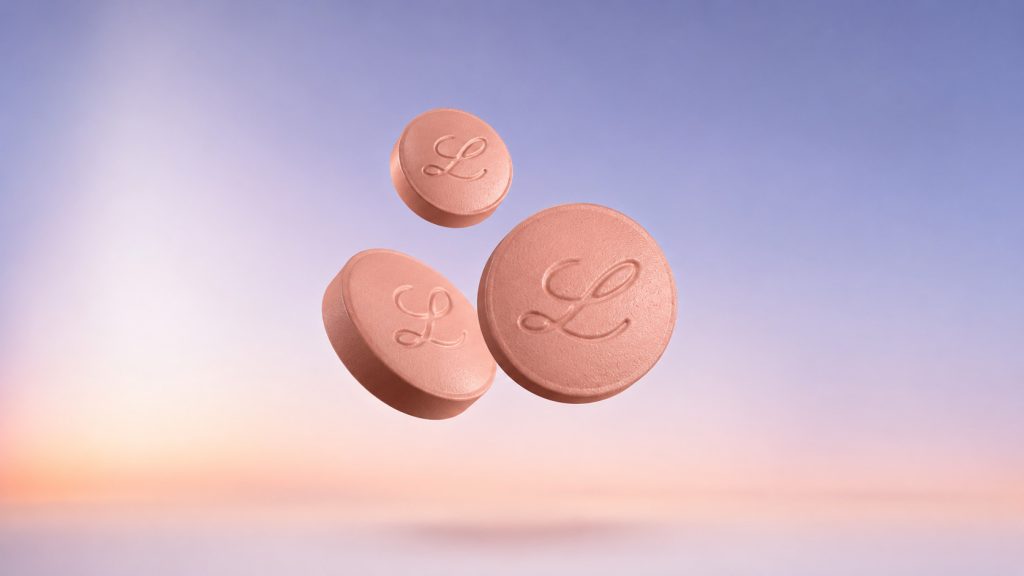
Not yet, on average. But for a meaningful number of patients, the new oral GLP-1 pill is the right choice. Foundayo (orforglipron) produces around 12% average weight loss in its pivotal trial, with some patients losing up to 15%. Mounjaro (tirzepatide) injection still leads on magnitude, with around 20% average weight loss at the highest dose when paired with lifestyle support. The pill genuinely wins for patients with strong needle aversion, demanding travel schedules, milder weight categories, or those stepping down from injections. The injection still wins when the goal is the largest possible weight loss, when type 2 diabetes and cardiovascular risk are part of the picture, or when a patient is already doing well on tirzepatide.
- The oral GLP-1 era is real. Foundayo was FDA-approved in April 2026 and is available at Endocare in Dubai and Abu Dhabi.
- Oral Wegovy at the higher 25 mg dose for weight loss was approved by the US FDA in December 2025. It is not yet available in the UAE market soon.
- On average weight loss, the pill is below the strongest injection. It is closer to the injectable semaglutide range than to tirzepatide.
- The pill is the right choice for some patients and not for others. The decision should be clinical, not based on convenience alone.
- Long-term outcome data is still stronger for the injections, especially semaglutide, which has dedicated cardiovascular outcome data from the SELECT trial.
- At Endocare, the medication is matched to the patient’s phenotype, weight category, lifestyle, and medical history, then supported by nutrition, body-composition tracking, and lifestyle coaching from our clinical nutritionist.
What “oral GLP-1” actually means in 2026
Until recently, every GLP-1 receptor agonist used for weight loss was an injection. Mounjaro, Wegovy, and Ozempic are all once-weekly injectable medications. The shift in 2025 and 2026 is that two oral GLP-1 options have entered the market for weight loss. The first is oral Wegovy, a daily tablet of semaglutide approved by the US FDA at the 25 mg dose in December 2025 – this dose is not yet available in the UAE, but is expected soon. The second is Foundayo (orforglipron), a daily, non-peptide GLP-1 pill from Eli Lilly that was FDA-approved in April 2026 and is now available in the UAE through licensed pharmacies. Both are taken once a day, by mouth. Both target the same GLP-1 receptor that the injectable medications act on. The mechanism is the same family. The delivery is what is new.
There is also Rybelsus, the original oral semaglutide tablet, which has been around for several years. Rybelsus is licensed for type 2 diabetes at lower doses, and its weight-loss effect is more modest than the new 25 mg oral Wegovy. For most patients asking about an oral GLP-1 pill for weight loss in 2026, the conversation is really about Foundayo and oral Wegovy.
Effectiveness: what the trial numbers say
Honest comparison starts with honest numbers. Different trials, different populations, different durations, so the figures below are averages from the main pivotal trials, not head-to-head results.
- Foundayo (orforglipron): around 12% average weight loss at the highest dose in the ATTAIN-1 Phase 3 trial in adults with obesity, without type 2 diabetes. Some patients lost up to 15%.
- Oral Wegovy 25 mg (oral semaglutide): around 12 to 15% average weight loss at the higher dose in the OASIS programme.
- Wegovy injection (semaglutide 2.4 mg, weekly): around 15% average weight loss over 68 weeks in the STEP 1 trial when combined with lifestyle support.
- Mounjaro injection (tirzepatide 15 mg, weekly): around 20% average weight loss over 72 weeks in SURMOUNT-1, the highest figure in the class so far.
So on the headline number, the new oral GLP-1 pills sit close to the injectable semaglutide, and below high-dose tirzepatide. That is the cleanest read of the data we have today. It is not “just as good” as the injection, and it is not “far behind”. It is real, doctor-prescribed weight loss that lands in the same range as the original semaglutide injection, in a tablet form.
Two further notes. Long-term outcome data, particularly on cardiovascular events, is currently stronger for injectable semaglutide thanks to the SELECT trial. And individual results vary. Some patients on the pill will lose more than the average. Some patients on the strongest injection will lose less. The averages are guides, not promises.
Where the pill genuinely wins
There are real, clinical reasons a daily oral GLP-1 pill is the right answer for a meaningful group of patients. These are the patterns we see in clinic.
Strong needle aversion
Some patients will simply not start an injection. They may have tried, paused, and never resumed. They may have anxiety around needles that no amount of reassurance fixes. For these patients, the choice is not pill versus injection. It is pill versus nothing. A daily tablet that delivers around 12% average weight loss with proper medical support is a far better outcome than a high-dose injection that never gets used.
Travel-heavy lifestyles and cold-chain hurdles
Patients who travel for a living, work between Dubai and another country, or move between climates often find weekly injections logistically demanding. Pens need refrigeration. Schedules slip. Doses get skipped. A daily tablet is far easier to keep on track when life is in motion.
Milder weight categories
For patients in the lower BMI ranges who still qualify for medical weight-loss medication, the magnitude of weight loss needed may be in the range that an oral GLP-1 reliably delivers. Reaching the 12 to 15% range can be enough to put many obesity-linked conditions, including pre-diabetes, mildly elevated blood pressure, and early polycystic ovarian syndrome features, into a much better place. This is one of the everyday roles of Endocare’s medical weight-loss programme.
Stepping down from an injection
After a successful course on Mounjaro or Wegovy, the long-term goal is for patients to keep the weight off through habits learned during treatment. For some patients, a step-down option to a lower-burden oral GLP-1 is useful, either short-term to bridge the transition, or as a lighter form of long-term support if and when it is clinically appropriate. This is one of the more practical uses of the oral pill that gets missed in the general comparison.
Patients who tolerated the molecule poorly at higher injectable doses
Some patients respond well to semaglutide or tirzepatide at lower doses, but struggle with side effects as the dose is increased. A daily oral GLP-1 at a steady, lower-intensity exposure may be tolerated better for some of these patients, while still keeping them in the GLP-1 family.
Where the injection still wins
There are equally clear situations where the injectable GLP-1 is the more responsible recommendation.
Higher bmi and the need for larger weight loss
When the medical goal is the largest possible reduction in body weight, the highest-magnitude option in the class today is tirzepatide. Mounjaro’s 20% average is meaningfully higher than the oral GLP-1 range. For patients with a BMI well above 35, or with severe obesity-related complications, that extra magnitude can matter clinically, not just cosmetically. Patients in higher BMI categories or with more complex metabolic conditions are usually directed to tirzepatide for its higher average magnitude.
Type 2 diabetes with cardiovascular risk
Injectable semaglutide has direct cardiovascular outcome data in patients with established cardiovascular disease and overweight or obesity, from the SELECT trial. Injectable tirzepatide has strong glucose-lowering data in type 2 diabetes from the SURPASS programme. When the patient’s profile includes diabetes and cardiovascular risk, the injection still has the deeper evidence base and remains the default option for many endocrinologists, including ours.
How an endocrinologist actually decides
In clinic, the decision between an oral GLP-1 pill and an injectable GLP-1 is built around the patient, not the medication. The starting point is a full assessment. Dr Hecham Harb’s consistent position in our patient education materials is that the medication is matched to the patient’s phenotype and goals, not to preference alone or to whatever is most discussed online that week.
Here is the framework we use at Endocare when a patient asks about the new oral GLP-1.
- Recent labs and medical history. Blood tests within the past three months. Thyroid, kidney, liver, lipid profile, HbA1c, and where relevant, hormonal panels.
- Body-composition analysis. Every patient gets a body-composition scan, included free of charge with every consultation, for every patient, on every visit. This shows fat mass, visceral fat, skeletal muscle, and body water, which all inform medication choice and lifestyle planning.
- Weight category and goal. The current BMI, the realistic medical target, and how much of the goal is about magnitude versus sustainability.
- Type 2 diabetes, pre-diabetes, cardiovascular history, PCOS, fatty liver, sleep apnoea, joint pain. The presence or absence of these shifts the recommendation.
- Lifestyle realities. Travel patterns, work schedule, eating windows, family routines, ability to follow a daily versus weekly schedule.
- Patient preference, taken seriously but not in isolation. Needle aversion is real and respected. So is the desire for maximum effectiveness. The job is to find the option that matches both the clinical picture and the patient’s life.
Out of that conversation comes a recommendation. For some patients, the answer is Foundayo. For others, it is Wegovy or Mounjaro. The next step is to book a medication-selection consultation.
What this means for UAE patients today
Two practical points for patients reading this from the UAE.
First, Foundayo is now available in the UAE through licensed pharmacies, and Endocare prescribes it as part of the medical weight-loss programme. Wegovy at Endocare is also available, alongside Mounjaro. Patients in Dubai and Abu Dhabi can access these options after a consultation with our endocrinologist, with the standard support: free medication delivery (no markup), monthly follow-ups, body-composition tracking on every visit, and ongoing lifestyle coaching.
Second, oral Wegovy at the higher 25 mg dose has been approved in the US since December 2025. It is not yet available in the UAE market, but is expected to be available in the UAE soon. For semaglutide in the UAE today, the most reliable options remain the Wegovy injection for weight loss and the Ozempic injection for type 2 diabetes or pre-diabetes (where weight loss is a secondary effect).
For a deeper read across the class, see the the full pill-vs-injection comparison and what patients should know about a Wegovy pill. Local UAE news coverage on the 2026 weight-loss pill landscape is available via The National’s UAE coverage of the new weight-loss pills.
How Endocare supports the medication, whatever you choose
GLP-1 medication, whether oral or injectable, is not a stand-alone solution. The medication reduces appetite and helps regulate blood sugar. What the patient does with that window is what determines the result and how durable it is.
At Endocare, every patient on a GLP-1 medication is supported by:
- A consultant endocrinologist who selects and adjusts the medication based on lab results, side-effect tolerance, and progress.
- A clinical dietitian and lifestyle coach who works with the patient on nutrition, movement, sleep, and stress, with practical tips, swaps, and recipes that fit the patient’s actual routine. Targets such as protein intake are personalised per patient from the body-composition scan and medical history, not given as a one-size-fits-all number.
- Body-composition tracking on every visit, included free of charge, so that fat loss and muscle mass are followed alongside the number on the scale.
- Scheduled laboratory monitoring at clear intervals.
- Steady support through Endocare’s dedicated care coordinators between visits for questions about dosing, side effects, and day-to-day adjustments.
- A maintenance plan for the period after the medication is stepped down, so patients are prepared in advance for the shift, with continued contact with the team if support is needed later.
Frequently asked questions
Is Foundayo as good as Mounjaro?
On average weight loss, no. Foundayo’s pivotal trial places its average weight loss at around 12%, with some patients losing up to 15%, while Mounjaro at the highest dose averages around 20%. Foundayo can still be the right choice for the right patient, especially those with strong needle aversion, milder weight categories, or demanding travel schedules. The honest framing is that they are not interchangeable, and the decision should be based on the patient’s full clinical picture rather than the headline number alone.
Should I switch from my injection to the pill?
Only after a proper consultation. If a patient is doing well on Mounjaro or Wegovy, tolerating the medication, and on a clear path toward their goal, switching to an oral GLP-1 to chase convenience rarely makes clinical sense. If injections have become a barrier (skipped doses, ongoing aversion, repeated logistical issues), an oral option may be worth discussing with your endocrinologist. The switch needs to be planned, not improvised.
Will the oral GLP-1 pill be cheaper than the injection?
Pricing in the UAE varies by molecule, dose, and pharmacy, and continues to evolve as new products launch. Endocare does not add a markup on medication and delivers free of charge. For the most current Foundayo pricing alongside Mounjaro, Wegovy, and Ozempic, patients are best advised to ask during their consultation, since the figures change. See the Foundayo programme for further details.
Will the oral GLP-1 pill be safe long-term?
The safety profile of GLP-1 medications as a class is well established. The most common side effects are gastrointestinal: nausea, reduced appetite, mild stomach upset, occasional constipation or diarrhoea, especially as the dose is built up. Long-term outcome data, particularly on cardiovascular events, is currently strongest for injectable semaglutide. The oral GLP-1 medications have a shorter clinical history, and longer-term real-world data is still being gathered. At Endocare, every patient on a GLP-1 medication is reviewed regularly by an endocrinologist, with labs and progress checks at set intervals.
Who should not take an oral GLP-1 pill?
Patients with a personal or family history of medullary thyroid carcinoma, multiple endocrine neoplasia type 2, severe gastroparesis, active pancreatitis, or who are pregnant or planning pregnancy are generally not candidates for GLP-1 therapy. Patients with significant kidney or liver disease, certain gastrointestinal conditions, or specific medication interactions also need careful assessment. In any case, patients should not decide by themselves to start a GLP-1 pill — a doctor review is critical to ensure the treatment is safe and appropriate for the individual.
The arrival of effective oral GLP-1 medications is a real shift in weight-loss medicine, and a useful one. It expands the options for patients who would never start an injection, and it gives endocrinologists a finer set of tools to match medication to person. It does not, on the evidence we have today, replace the injection for every patient. The honest answer to “is the pill as good as the injection” is: for some patients, effectively yes. For others, no, and the injection is still the better recommendation. If you would like a clear answer for your own situation, the next step is a consultation with our endocrinologist.
Book a medication-selection consultation at Endocare in Dubai or Abu Dhabi. Our endocrinologist will review your medical history, body-composition analysis, and goals, and recommend the option that fits your full clinical picture, not just the most talked-about one.
