
Home » GLP-1 Weight Loss Injection Clinic in UAE » Ozempic vs Wegovy: Key Differences Explained
Ozempic vs Wegovy: Key Differences Explained

Dr. Hecham Harb
Consultant Endocrinologist & Medical Director
Book Your Consultation
- Specialist consultation
- Personalized Coaching
- Body Composition Analysis
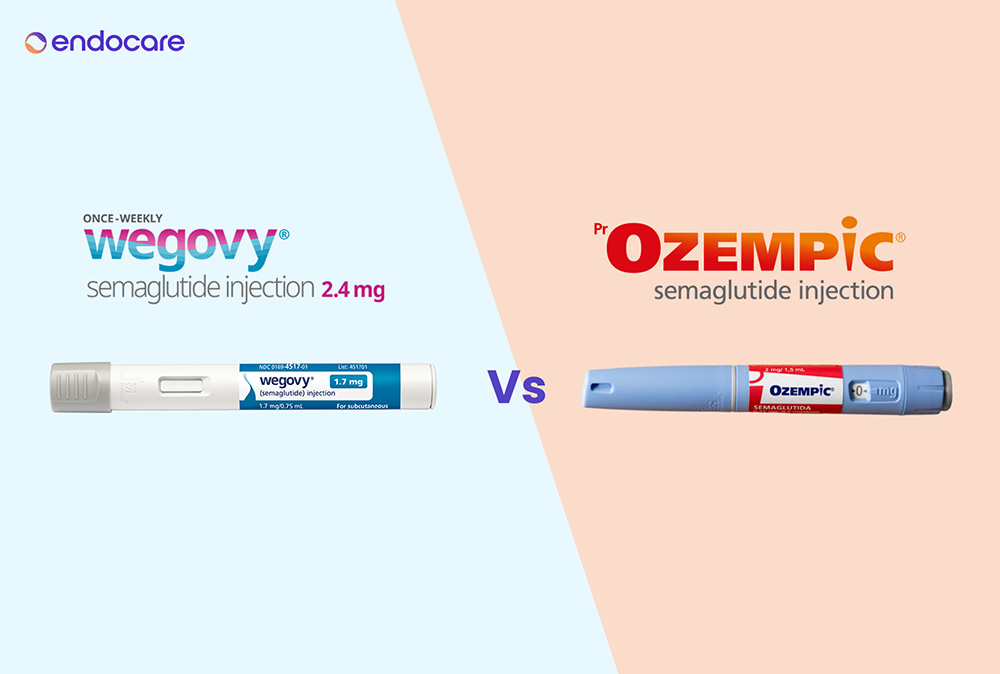
If you’re comparing ozempic vs wegovy, the honest starting point is simple: they are chemically the same medication. Both contain semaglutide, a GLP-1 receptor agonist given as a once-weekly injection.
The difference between Ozempic and Wegovy is not the molecule itself, but how it is approved, dosed, and positioned in treatment pathways.
This article explains what those differences mean in real clinical practice, particularly in Dubai, where dosing availability and regulatory approval directly influence prescribing decisions.
The Short Answer
Both Ozempic and Wegovy contain semaglutide. They belong to the same drug class and are administered once weekly.
Ozempic is approved for type 2 diabetes.
Wegovy is approved for chronic weight management.
In Dubai, Ozempic is typically available up to a 1mg maintenance dose. Wegovy is titrated up to 2.4mg. That difference in maximum dosing is the most clinically relevant factor when discussing ozempic vs wegovy for weight loss.
At lower doses, appetite suppression and weight reduction may occur. At higher doses, the effects tend to be stronger and more consistent, which is why Wegovy is usually preferred when weight management is the primary goal.
Why Two Brand Names For The Same Medication?
Patients often ask why two names exist if the molecule is identical.
Pharmaceutical approvals are indication-specific. A manufacturer submits separate clinical trial programmes for different medical conditions. Novo Nordisk studied semaglutide for type 2 diabetes under the brand Ozempic, and separately for chronic weight management under the brand Wegovy.
The active compound is the same. What differs is the regulatory pathway, dosing protocol, and approved use. This is not unusual in medicine, many medications are marketed under different names depending on the condition they were studied for.
For this reason, clinicians often refer to “semaglutide” when discussing the drug itself, and use the brand name only when referring to approval status or dosing framework. Understanding this distinction helps clarify much of the confusion around the difference between Ozempic and Wegovy.
Where The Dosing Difference Actually Matters
In Dubai, the practical difference between the two brands becomes clear when you look at maximum dosing.
Ozempic is generally prescribed up to 1mg. Wegovy is titrated to 2.4mg as its maintenance target. That gap in available dose levels is what creates most of the variation in weight-related outcomes.
Semaglutide produces dose-dependent effects. As the dose increases, appetite suppression and average weight reduction tend to increase as well. The SELECT cardiovascular trial also showed meaningful risk reduction at this dosing level. Large weight-management trials were conducted using the higher 2.4mg target, which explains why results associated with Wegovy often appear more pronounced.
At 1mg, patients may experience appetite reduction and gradual weight change, but the expected magnitude is typically lower than what was demonstrated in obesity-specific trials.
For this reason, when weight management is the primary objective, clinicians often select the brand that allows escalation to the evidence-based target dose. When blood sugar regulation is the main concern, the lower dosing structure used for diabetes care may be entirely sufficient.
The distinction is not about the drug being different, it is about how high the treatment is designed to go.
Can Ozempic Be Used For Weight Loss?
Yes, it can, but context matters.
Ozempic is officially approved for type 2 diabetes, not for chronic weight management. However, physicians may prescribe it for weight-related goals when it aligns with a patient’s overall metabolic profile. This is known as off-label prescribing.
Off-label does not mean experimental or unsafe. It means the medication was studied and authorised for a different primary indication. In clinical practice, especially in markets like Dubai, this approach is common when Wegovy is unavailable, cost-prohibitive, or when a patient has overlapping concerns such as insulin resistance and elevated blood sugar.
Questions like is Ozempic approved for weight loss often reflect regulatory terminology rather than clinical reality. What determines appropriateness is medical assessment, dosing strategy, and structured follow-up, not branding alone.
Regardless of which product is used, supervision and lifestyle integration remain essential for sustainable outcomes.
How Doctors Decide Between Ozempic And Wegovy
The decision is rarely framed as which is better for weight loss Ozempic or Wegovy. Clinically, the question is whether the treatment plan aligns with the patient’s primary objective and health status.
Doctors first clarify the treatment goal. If diabetes or blood sugar control is central, Ozempic may be appropriate. If structured weight management is the primary focus, Wegovy’s higher dosing framework often makes it the more suitable option.
Other considerations include medication tolerance, prior response to semaglutide, access within the local market, and financial sustainability. Some patients begin with one and transition to the other if dose requirements change over time.
In structured settings such as Endocare, prescribing decisions are guided by metabolic screening, and a GLP-1 weight loss consultation helps determine the right option, individual risk assessment, and ongoing review. The choice is not made once and left unchanged. It is adjusted as response and clinical context evolve.
Conclusion
Ozempic and Wegovy contain the same medication, but their approval pathway and maximum dosing differ. For further reading, see our overview of common myths about weight loss injections, our Wegovy UAE overview, and our Ozempic UAE page. For patients comparing ozempic vs wegovy, the real distinction lies in treatment goals and available dose range. Doctors base the decision on clinical context, not brand preference, ensuring the approach fits both metabolic needs and long-term weight strategy. For patients also considering tirzepatide as an alternative, our Mounjaro vs Ozempic vs Wegovy comparison provides a useful clinical overview.
FAQs
Are Ozempic and Wegovy the same medication?
Yes. Both contain semaglutide and belong to the same GLP-1 drug class. The active compound is identical, but approval status and dosing limits differ.
Is Wegovy stronger than Ozempic?
Not in terms of the molecule. Wegovy allows escalation to a higher maintenance dose, which can produce greater appetite suppression compared to lower-dose Ozempic regimens.
Why would a doctor prescribe Ozempic instead of Wegovy?
This depends on the treatment goal, local availability, and patient profile. When diabetes or metabolic control is central, Ozempic may be appropriate.
Do they have the same side effects?
Yes. Because the medication is the same, ozempic vs wegovy side effects are broadly similar. Higher doses may increase gastrointestinal symptoms during dose adjustment.
Can I switch from Ozempic to Wegovy?
Yes, under medical supervision. Transitions are typically considered when higher dosing is clinically justified or treatment goals evolve.
Book Your Consultation
- Specialist consultation
- Personalized Coaching
- Body Composition Analysis