
Home » GLP-1 Weight Loss Injection Clinic in UAE » Peptides for Weight Loss: How Do They Work?
Peptides for Weight Loss: How Do They Work?

Dr. Hecham Harb
Consultant Endocrinologist & Medical Director

Book Your Consultation
- Specialist consultation
- Personalized Coaching
- Body Composition Analysis
01 Introduction
Interest in peptides for weight loss has grown quickly, but the term is often used too loosely. For patients researching specific options, see our pages on Mounjaro, Wegovy, and Ozempic.
Peptides are simply short chains of amino acids that act as signalling molecules in the body. That does not mean every peptide marketed for fat loss is a proven or safe treatment.
In practice, only a small group of peptide-based medications has strong clinical evidence for weight management. These include GLP-1 peptides for weight loss such as semaglutide, and dual-action incretin therapies such as tirzepatide. These medications have been studied in large human trials, approved by regulators, and prescribed within structured medical programmes.
By contrast, many compounds promoted online as weight loss peptides come from wellness or biohacking trends rather than established clinical medicine. Most have not completed rigorous human trials, do not have regulatory approval, and do not have clearly defined safety profiles.
In the UAE, peptide medications used for weight management are prescription-only and regulated through local health authorities.
This difference matters.
Patients searching for peptide therapy weight loss options are often presented with approved medications and unproven compounds as if they were equivalent.
They are not.
This article explains which peptide treatments are supported by evidence, which are not, and why that distinction is central to patient safety.
Endocare Clinic uses only regulatory-approved, clinically validated medications within a physician-led weight management programme.
Calculate your expected weight loss with peptides
Calculate your expected weight loss with peptides
current weight:
lose up to:
02 What Are Peptides?
Peptides are short chains of amino acids, typically fewer than 50, that function as biological messengers in the body. They play a central role in regulating hormones, appetite, digestion, glucose metabolism, and cellular communication. Naturally occurring peptides include insulin, GLP-1, GIP, and ghrelin.
Some medications are developed using synthetic peptides designed to mimic or enhance these natural signals. However, the term “peptide” refers to a broad molecular category, not a specific treatment standard. It does not indicate whether a compound is effective, approved, or safe for medical use.
This distinction is particularly important in the peptides for weight loss space. Certain peptide-based medications, such as semaglutide (Wegovy, Ozempic) and tirzepatide (Mounjaro), have completed large Phase III clinical trials and are prescribed for weight management based on strong human evidence.
By contrast, compounds often promoted online for weight loss, such as BPC-157, ipamorelin, CJC-1295, AOD-9604, and MOTS-c, do not have comparable clinical evidence. These have not undergone rigorous human trials, are not approved for weight management, and do not have clearly established safety profiles.
The key point is that not all peptides are equivalent. The difference between an approved medication and an experimental compound lies in the strength of clinical evidence, not in the label “peptide” itself.
03 How Peptides Influence Weight Regulation?
Some peptides can affect body weight by acting on specific biological pathways. These mechanisms are well understood in physiology, but only a few have been proven effective in clinical practice.
Key ways peptides may influence weight include:
- regulating appetite through brain signalling pathways
- slowing gastric emptying, which increases fullness during meals
- improving insulin sensitivity and glucose control
- influencing energy balance and fat metabolism
These effects can lead to reduced hunger, smaller portion sizes, and better metabolic control over time.
However, it is important to separate mechanisms from evidence. A peptide showing these effects in laboratory or early research settings does not mean it has been proven safe or effective for human weight loss. That requires controlled clinical trials, which most compounds marketed as weight loss peptides have not completed.
04 Peptides Marketed for Weight Loss And Why the Evidence Is Weak
A number of compounds are marketed online as peptides for weight loss, but most are not approved medical treatments and have not been validated in human clinical trials.
The issue is not whether these compounds have a theoretical biological effect, but whether they have been proven safe and effective in patients. In most cases, they have not.
Examples patients commonly encounter include:
- BPC-157: studied mainly in animal models; no controlled human data for weight loss
- Ipamorelin / CJC-1295: act on growth hormone pathways; limited human evidence and not approved for weight management
- AOD-9604: early research only; no meaningful clinical outcomes for weight loss
- MOTS-c: largely experimental, with evidence restricted to preclinical studies
These compounds are often obtained through non-regulated sources, where product quality, dosing accuracy, and safety cannot be verified. In the UAE, many are not registered with health authorities and cannot be prescribed within standard clinical care.
From a clinical standpoint, a plausible mechanism or early research signal is not enough. A treatment must demonstrate safety and effectiveness through controlled human trials before it can be recommended.
For this reason, Endocare uses only therapies that have completed full clinical development and have established safety profiles. This ensures that treatment decisions are based on evidence rather than trends.
The key point is simple: not all weight loss peptides are equivalent, the difference lies in the strength of clinical evidence supporting their use.
05 Clinically Approved GLP-1 Peptide Medications for Weight Loss
Among all peptides for weight loss, only a small group of treatments has strong clinical evidence. For a detailed breakdown, read our Mounjaro vs Ozempic vs Wegovy comparison and our common myths about weight loss injections overview. These are GLP-1 receptor agonists and dual incretin therapies, which are approved and widely used in medical weight management.
Semaglutide (Wegovy / Ozempic)
- Synthetic GLP-1 analogue, administered as a weekly injection
- Approved for weight management by major regulatory authorities
- Supported by large Phase III clinical trial programmes involving thousands of patients
- Demonstrates benefits beyond weight loss, including improvements in metabolic and cardiovascular health
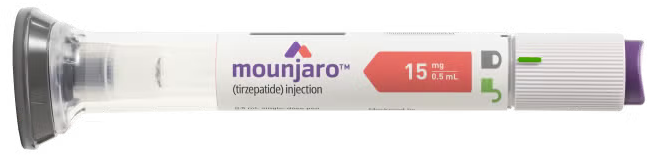
Tirzepatide (Mounjaro)
- Acts on both GLP-1 and GIP pathways
- Supported by large-scale clinical trials with consistent weight loss outcomes
- Addresses both appetite regulation and insulin sensitivity through a dual mechanism
- Both medications are available through licensed providers in the UAE and are prescribed within structured medical programmes.
06 How This Differs From Research Peptides
The difference between approved medications and unproven compounds is defined by evidence:
- Clinical validation
Approved treatments have completed large, controlled human trials. Most research peptides have not.
- Safety profile
GLP-1 medications have well-characterised side effects. Many experimental peptides do not.
- Manufacturing standards
Approved drugs are produced under strict pharmaceutical controls. Unregulated peptides may vary in quality and purity.
- Dosing protocols
Evidence-based treatments follow structured dose escalation. Research peptides have no validated dosing guidelines.
- Clinical oversight
Approved therapies are used with monitoring and follow-up. Experimental compounds are often used without supervision.
This is why GLP-1-based therapies represent the current standard in peptide therapy weight loss, while other compounds remain experimental.
At Endocare, treatment is based on these clinically validated medications, used within a structured programme that includes medical supervision, dose optimisation, and ongoing monitoring.
07 Safety Risks of Unproven Peptides
Approved GLP-1 medications such as semaglutide and tirzepatide have well-defined safety profiles based on extensive clinical trials. The concern with other peptides for weight loss is not just effectiveness, but the lack of reliable safety data.
Unknown Risk Profile
Most research peptides have not completed structured Phase I–III trials. This means potential side effects, long-term risks, and drug interactions are not fully understood in humans.
No Established Dosing Standards
Without clinical trials, there are no validated dosing ranges or titration protocols. Information available online is often anecdotal and not based on controlled evidence.
Manufacturing and Quality Concerns
Unregulated peptides are often sourced through compounding routes or online vendors:
- no guaranteed purity or consistency
- risk of incorrect concentration
- potential contamination or degradation
- no reliable quality control
Patients have no practical way to verify what they are receiving.
Lack of Clinical Monitoring
These compounds are typically used without medical supervision:
- no baseline investigations
- no follow-up testing
- no monitoring of metabolic or organ function
Adverse effects may go unnoticed until they become clinically significant.
From a medical perspective, using compounds without established safety and monitoring frameworks exposes patients to avoidable risk. This is why treatments must be guided by clinical evidence rather than early-stage research or marketing claims.
08 Why Medical Supervision Matters?
Effective peptide-based weight management requires more than the medication itself. Our specialist nutritionists and consultant endocrinologists guide every patient through a personalised plan. To get started, book a GLP-1 weight loss consultation. It depends on structured clinical oversight at every stage of treatment.
Patient Assessment
Before starting therapy, patients should be evaluated for:
- underlying medical conditions
- contraindications
- current medications
This ensures treatment is appropriate and safe.
Baseline Investigations
Initial testing typically includes:
- HbA1c and glucose markers
- fasting insulin
- lipid profile
- thyroid and renal function
These provide a baseline for monitoring treatment response.
Structured Treatment Approach
Clinically approved therapies follow:
- gradual dose escalation
- defined treatment protocols
- adjustment based on individual response
Ongoing Monitoring
During treatment, doctors track:
- weight and body composition
- metabolic markers
- treatment tolerance
Regular follow-up allows early identification of side effects and ensures continued progress.
Integrated Support
Sustainable results also require:
- nutrition guidance
- activity and lifestyle support
- long-term planning to reduce weight regain
None of this infrastructure exists for unproven peptides. There are no guidelines, no monitoring standards, and no evidence-based treatment pathways.
At Endocare, treatment is delivered through a physician-led programme that combines evidence-based medication with ongoing clinical monitoring and integrated lifestyle support, ensuring both safety and long-term outcomes.
10 FAQ
How do peptides help with weight loss?
Certain peptides influence body weight by acting on appetite, digestion, and metabolic pathways. They can reduce hunger, slow gastric emptying, and improve glucose regulation. However, only a small group of GLP-1 peptides for weight loss has been shown in clinical trials to produce consistent and meaningful results. Most other compounds promoted for fat loss do not have this level of evidence.
How quickly can you lose weight with peptides?
With clinically approved treatments such as GLP-1–based medications, some patients begin to notice early changes within the first month, particularly in appetite and eating patterns. More visible weight loss typically develops over the following months, but the rate of progress varies depending on factors such as dose stage, starting body composition, and treatment consistency.
For other peptides, there is no reliable data to define expected timelines, as most have not been studied in controlled human trials.
Are peptides better than Ozempic?
Ozempic itself is a peptide-based medication (semaglutide). The more relevant question is whether a specific peptide has strong clinical evidence. Currently, semaglutide and tirzepatide are the only peptide-based treatments supported by large-scale human trials for weight management. Other compounds are often discussed online but do not have comparable data.
What are the side effects of peptides for weight loss?
For approved GLP-1 medications, side effects are well documented and typically managed through gradual dose adjustment and medical supervision. In contrast, many compounds marketed as peptides for fat loss and muscle gain do not have clearly defined safety profiles, which means potential risks are not fully understood.
Are research peptides safe for weight loss?
There is not enough clinical evidence to confirm the safety of most research peptides used for weight loss. Many have not undergone proper human trials, and their effects in real-world use are not well established. Using such compounds without medical supervision carries uncertainty in both safety and outcomes.
Book Your Consultation
- Specialist consultation
- Personalized Coaching
- Body Composition Analysis