

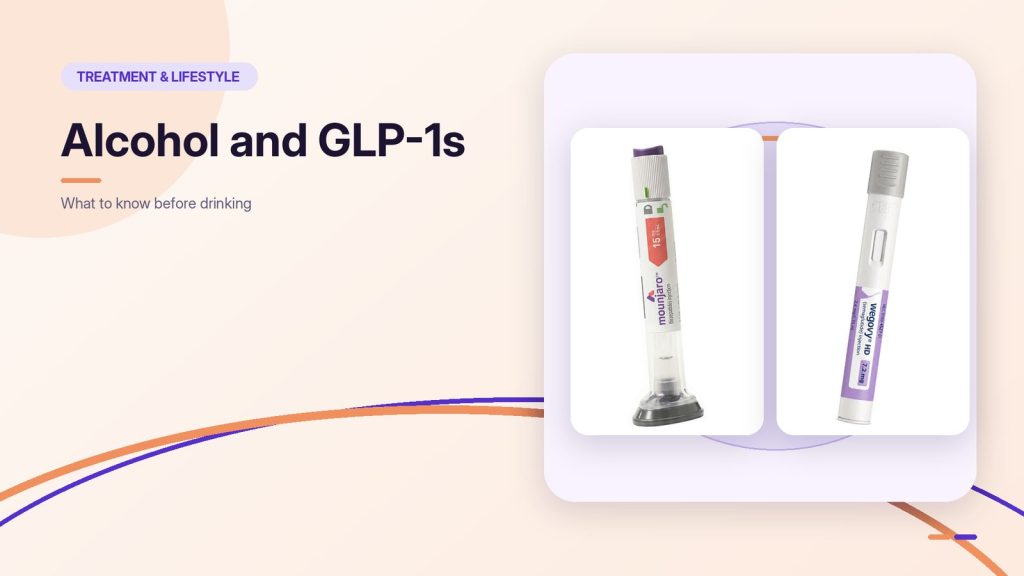
The NHS advises that it is best to avoid alcohol while using tirzepatide or semaglutide, the active ingredients in Mounjaro, Wegovy and Ozempic, because alcohol can increase nausea and vomiting. This is practical advice, not a formal contraindication. If you take insulin or a sulfonylurea, alcohol can also increase the risk of low blood sugar. If you choose to drink, we recommend small amounts with food. Your endocrinologist can advise you based on your medication and dose.
- The NHS advises that it is best to avoid drinking alcohol while using tirzepatide, the active ingredient in Mounjaro, and gives the same advice for semaglutide in Wegovy and Ozempic.
- Alcohol can make nausea and vomiting worse, and these side effects can be particularly pronounced in the first few days at a new dose.
- The prescribing information for Mounjaro warns that dehydration linked to vomiting or diarrhoea has been associated with kidney injury.
- Heavy drinking is itself a risk factor for pancreatitis, which is among the warnings for GLP-1 medications, but those warnings do not show that moderate drinking adds to the risk.
- MedlinePlus notes that alcohol can cause seriously low blood sugar in people who take insulin or certain diabetes medications.
- The NHS puts the energy in alcohol at 7 calories per gram, which can make a calorie deficit more difficult to maintain.
- In a small 2025 trial of 48 adults with alcohol use disorder, participants taking low-dose semaglutide reported less craving for alcohol over nine weeks. The trial was small and exploratory, and no GLP-1 medication is approved to treat alcohol use disorder.
Can you drink alcohol on Mounjaro, Wegovy or Ozempic?
On its page for tirzepatide, the NHS says it is best to avoid drinking alcohol, because alcohol can increase side effects such as feeling or being sick. Its page for semaglutide says it is best not to drink alcohol, for the same reason. This is practical advice to limit side effects, and the prescribing information does not list alcohol as a contraindication.
Mounjaro contains tirzepatide. Wegovy and Ozempic both contain semaglutide, and Ozempic is approved for type 2 diabetes. Foundayo (orforglipron) is a once-daily tablet that acts on the same GLP-1 receptor. All four are GLP-1 medications.
The Mounjaro prescribing information does not specify an alcohol limit, but alcohol may worsen nausea or dehydration. If you choose to drink, we recommend keeping to small amounts and avoiding alcohol in the first days after you start treatment or increase your dose.
How alcohol can affect side effects and hydration
Nausea, vomiting and diarrhoea are among the most common side effects of GLP-1 medications. Alcohol can add to nausea and vomiting.
Side effects such as nausea or constipation can be particularly pronounced in the first few days at a new dose. They often improve as your body adjusts, although some symptoms last longer. Symptoms can also return after a later dose increase.
Repeated vomiting or diarrhoea can lead to dehydration. The prescribing information for Mounjaro reports cases of acute kidney injury in patients taking the medication, most of them after gastrointestinal side effects had caused dehydration. If you are vomiting or have diarrhoea, we recommend drinking enough water and avoiding alcohol until you have recovered.
If you experience nausea or constipation, your endocrinologist can adjust the pace of dose increases and, where needed, prescribe medication to help manage these side effects. Our page on the side effects of Mounjaro explains which symptoms need medical advice.
Alcohol and pancreatitis
Acute pancreatitis is inflammation of the pancreas. The same prescribing information lists it among the warnings for Mounjaro. It also appears among the warnings for other GLP-1 medications.
The NHS names gallstones and drinking a lot of alcohol as the most common causes of acute pancreatitis. Heavy drinking is itself a risk factor for pancreatitis, and the warnings for GLP-1 medications do not show that moderate drinking adds to this risk. We recommend avoiding heavy drinking entirely while you take a GLP-1 medication.
The NHS advises immediate help for sudden, severe pain in the abdomen, particularly pain that spreads to the back or comes with a fast heartbeat or difficulty breathing. If this happens in the UAE, call an ambulance on 998.
Alcohol and blood sugar if you have diabetes
Some patients take a GLP-1 medication for type 2 diabetes, sometimes alongside insulin or other diabetes medications. For these patients, alcohol needs particular care.
MedlinePlus, a service of the US National Library of Medicine, explains that the liver stops releasing glucose while it processes alcohol. For patients who take insulin or certain other diabetes medications, the result can be seriously low blood sugar. The Mounjaro prescribing information also warns that low blood sugar is more likely when the medication is used with insulin or a sulfonylurea. If you take insulin or a sulfonylurea, we recommend agreeing individual advice on alcohol with your endocrinologist and never drinking on an empty stomach.
MedlinePlus advises drinking alcohol with a meal or a snack rich in carbohydrates. It also notes that the symptoms of low blood sugar can resemble alcohol intoxication. If you have diabetes, we recommend discussing alcohol with your endocrinologist, who can review your other medications.
Alcohol and your weight loss
The NHS gives examples: a pint of 5% beer can contain up to 222 calories, and a 175 ml glass of 12% wine up to 158 calories. Mixers add further calories.
Three pints of 5% beer in a week can therefore add around 670 calories. Over a month, regular drinking can make your nutrition plan more difficult to follow.
Endocare’s lifestyle coaches work with you on nutrition, activity, sleep and stress. They can help you plan for social occasions where alcohol is served.
Can weight loss injections reduce the urge to drink alcohol?
Researchers are studying whether GLP-1 medications affect alcohol use. In a small randomised trial published in JAMA Psychiatry in 2025, 48 adults with alcohol use disorder who were not seeking treatment received low-dose semaglutide or a placebo for nine weeks.
Participants taking semaglutide reported less craving for alcohol and had fewer drinks on the days they drank. The authors concluded that the results justify larger trials.
None of these medications is currently approved as a treatment for alcohol use disorder. If you are concerned about how much you drink, we recommend discussing it with your endocrinologist, who can advise whether further support is appropriate.
Frequently asked questions
Is a hangover worse on Mounjaro?
Nausea and vomiting can occur both with a hangover and as side effects of Mounjaro. Alcohol can therefore make you feel more unwell, particularly in the first days at a new dose. We also recommend drinking water alongside any alcohol.
What is the best alcohol to drink on Mounjaro?
No type of alcoholic drink has been shown to be safer than another during treatment. Smaller measures and lower-strength drinks contain less alcohol and fewer calories. Sugary mixers and cocktails add calories.
Should I skip my injection if I plan to drink alcohol?
We recommend keeping to your usual dose day. Skipping or moving a dose because of a social event can disrupt your treatment, so speak to your endocrinologist before you change your dose day.
Can I drink alcohol while taking Foundayo?
Foundayo is a GLP-1 medication, and like the injections it can cause nausea and vomiting. Our page on the side effects of Foundayo lists them in full. We recommend the same caution with alcohol: small amounts, with food.
Patients should not decide by themselves to start a GLP-1 medication. A doctor’s review is critical to ensure the treatment is safe and appropriate for the individual.
Monthly follow-up appointments can be held in person at the clinic or online. We recommend the first consultation in person, as it includes a physical examination and body composition analysis.
At our Dubai clinic, your endocrinologist will assess you, review your medications, including any treatment for diabetes, and discuss how alcohol fits with your treatment plan. You can book a weight loss consultation on +971 4 285 3885 or send us a message on WhatsApp.
