
Home » GLP-1 Weight Loss Injection Clinic in UAE » Foundayo (Orforglipron) Weight Loss Pill in the UAE » How and When to Take Foundayo (Orforglipron): A UAE Dosing Guide
How and When to Take Foundayo (Orforglipron): A UAE Dosing Guide

Dr. Hecham Harb
Consultant Endocrinologist & Medical Director
Book Your Consultation
- Specialist consultation
- Personalized Coaching
- Body Composition Analysis
Foundayo (orforglipron) is taken once a day. You can take it at any time of day, with or without food, which is one of its most practical advantages over some other oral weight-loss medicines. Treatment starts at a low dose and steps up gradually, so your body has time to adjust and side effects stay manageable. Before you start, a doctor review is essential to confirm Foundayo is safe and suitable for you.
01 What is Foundayo (orforglipron)?
Foundayo is the brand name for orforglipron, a once-daily oral GLP-1 receptor agonist developed by Eli Lilly for chronic weight management. Like other GLP-1 medicines, it acts on appetite signals so you feel full sooner and eat less. GLP-1 receptor agonists are an established class of prescription weight-management medicines, and they work best alongside nutrition and lifestyle change. The difference with Foundayo is that it is a tablet rather than an injection.
Foundayo was approved by the US FDA in April 2026 and is available in the UAE through licensed pharmacies, including at Endocare in Dubai and Abu Dhabi, where it is prescribed and supervised by a team of doctors. You can read more on our Foundayo in the UAE hub for a full overview of how it works and who it suits. If you are deciding between a tablet and an injection, our guide on the first oral GLP-1 pill versus the injection walks through what the trial numbers mean for real patients.
02 When to take Foundayo: any time of day
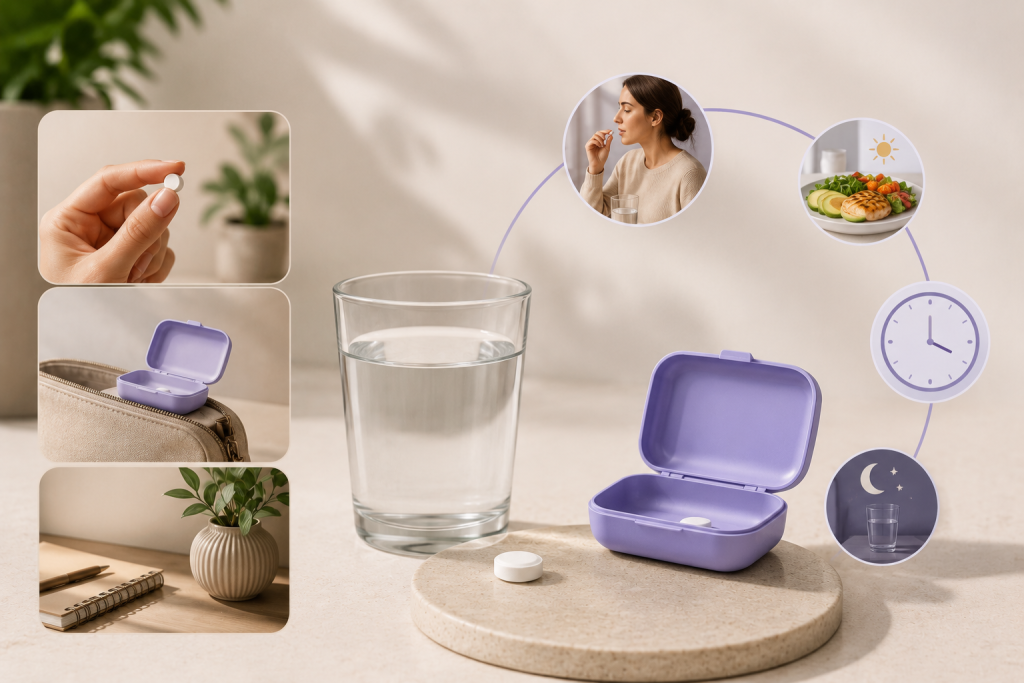
One of the things patients appreciate most about Foundayo is the flexibility. It is a once-daily tablet, and it can be taken at any time of day, with or without food. There is no fixed morning slot and no fasting window to plan around. What matters most is consistency, so pick a time that fits your routine and take it at roughly the same time each day. For shift workers, frequent travellers, or anyone with an unpredictable schedule, this is a genuinely useful feature.
If you ever need to shift your usual time, you can. The goal is simply to keep the once-daily rhythm so the medicine stays steady in your system.
03 Can you take Foundayo with or without food?
Yes. Foundayo can be taken with or without food. You do not need an empty stomach, and you do not need to wait a set period before eating or drinking. This sets it apart from oral semaglutide tablets, which are taken in the morning on an empty stomach with a small sip of water, followed by a wait of about 30 minutes before food, drink, or other medicines.
With or without food, explained
Some people find that taking Foundayo alongside a meal helps settle the stomach, especially in the early weeks. Others prefer to take it on its own. Both are fine. If you are unsure what works best for you, your Endocare specialist can help you find a routine that is comfortable and easy to stick to.
Taking Foundayo with other medicines
If you take other regular medicines, tell your specialist before you start Foundayo. Most people can continue their usual prescriptions, but it is always reviewed on an individual basis. Never stop or change another medicine on your own to fit Foundayo around it.
How Foundayo timing compares with a typical oral semaglutide tablet:
Foundayo (orforglipron) | Typical oral semaglutide tablet | |
How often | Once daily | Once daily |
Time of day | Any time | Morning |
Food rule | With or without food | Empty stomach |
Wait before eating | None | About 30 minutes |
Note: the exact instructions for any medicine come from your specialist and the official label. This table is a general guide.
04 The Foundayo dose ladder: how it steps up
Your specialist will not start Foundayo at its full strength. Like other GLP-1 medicines, it begins at a low dose and increases in steps. This gradual approach, often called titration, gives your body time to get used to the medicine and helps keep side effects mild.
The price of Foundayo changes with the dose, and the current figures are listed in our Foundayo price guide.
Starting dose and why it begins low
Your specialist sets your starting dose and decides when to move up. Starting low is deliberate. It reduces the chance of nausea and other early stomach symptoms, and it lets your care team see how you respond before increasing the strength.
How long you stay at each step
How long you stay at each step depends on how well you tolerate the medicine. For many patients the dose is increased after a set number of weeks, but the timing is always individual. If a particular step causes more side effects, your specialist may keep you there longer or adjust the plan. The dose can also be held lower if that is the right level for you. The aim is a steady, comfortable path to an effective dose, not a race to the top.
This kind of personalised titration is central to how Endocare runs its medical weight loss program. Your progress is reviewed at monthly follow-ups, alongside a body-composition analysis, so dose decisions are based on real data, not guesswork.
A simple way to think about taking Foundayo each day:
- Take one tablet once a day, at a time that suits you.
- Take it with or without food, whichever feels better.
- Try to keep to roughly the same time each day.
- Follow the step-up plan your specialist gives you, and do not increase the dose yourself.
- Bring any side effects to your follow-up, or contact the clinic sooner if you are worried.
05 What to do if you miss a dose
If you forget a dose, the general rule for a once-daily medicine is to take it as soon as you remember on the same day. If it is already close to your next scheduled dose, skip the missed one and continue as normal the next day. Do not take two doses at once to make up for a missed tablet. If you are ever unsure, your specialist or the Endocare care team can advise you, and the official Foundayo instructions also cover missed doses.
06 Side effects during dose changes and how Endocare manages them
Like all GLP-1 medicines, Foundayo can bring some side effects, and these are reported more often around the time the dose goes up. The most common are gastrointestinal: nausea, a feeling of fullness, mild reflux, or changes in bowel habit. They can be particularly noticeable in the first few days at a new dose and usually settle within the first two weeks at that step. Not every patient experiences them.
At Endocare, side effects are managed actively rather than left to chance. The dose is titrated together by the specialist and the patient, nutrition is adjusted with help from our lifestyle coaches, and our doctors are always available to support patients with advice between visits. If symptoms are more than mild, the plan can be slowed or adjusted.
07 Who may not be suitable for Foundayo
Foundayo is a prescription medicine for chronic weight management, not a quick fix and not something to start on your own. It is not suitable for everyone. Your medical history, current medicines, and reasons for weight gain all need to be assessed first. That is why Endocare begins with a specialist consultation and a review of recent blood tests before anything is prescribed.
In any case, patients should not decide by themselves to start a GLP-1 pill. A doctor review is critical to ensure the treatment is safe and appropriate for the individual.
08 How Foundayo dosing works at Endocare in Dubai and Abu Dhabi
At Endocare, Foundayo is part of a doctor-supervised weight-loss approach, not a standalone tablet. After your first consultation and lab review, your specialist sets a starting dose and a step-up plan tailored to you. You then attend monthly follow-ups that include a body composition analysis, so your team can track fat and muscle, not just the number on the scale. Lifestyle coaching runs alongside to support nutrition, activity, sleep, and stress, which is what helps results last. Patients in the capital can find clinic details on our Foundayo in Abu Dhabi page, and Dubai patients can use our Foundayo in Dubai page.
Medication delivery is free for all patients, typically same-day in Dubai and within 48 hours across the UAE, and Endocare does not add any markup to the pharmacy price.
09 FAQ
What is the best time of day to take Foundayo?
There is no single best time. Foundayo is a once-daily tablet that can be taken at any time of day, with or without food. Choose a time you can keep to consistently.
Can I take Foundayo with food?
Yes. Foundayo can be taken with or without food, and there is no required waiting period before eating or drinking. Some patients find taking it with a meal helps settle the stomach early on.
What is the starting dose of Foundayo?
Foundayo starts at a low dose and steps up gradually. Your specialist decides your exact starting dose and when to increase it, based on how you respond and tolerate the medicine.
What happens if I miss a dose of Foundayo?
Take it as soon as you remember on the same day. If it is nearly time for your next dose, skip the missed one and carry on as normal. Do not double up. Check the official instructions or ask your specialist if unsure.
How long does Foundayo take to work?
Appetite changes are often noticed within the first few weeks, but meaningful weight change builds gradually over months as the dose steps up and lifestyle habits take hold. Results vary from person to person.
Is Foundayo available in the UAE?
Yes. Foundayo is available in the UAE through licensed pharmacies and is prescribed at Endocare in Dubai and Abu Dhabi under endocrinologist supervision.
If you are considering Foundayo, the safest next step is a proper assessment. Book a GLP-1 weight loss consultation with an Endocare endocrinologist in Dubai or Abu Dhabi, and we will check whether Foundayo is right for you and build a personalised dose plan. You can also call the clinic or send us a message on WhatsApp.
Book Your Consultation
- Specialist consultation
- Personalized Coaching
- Body Composition Analysis