

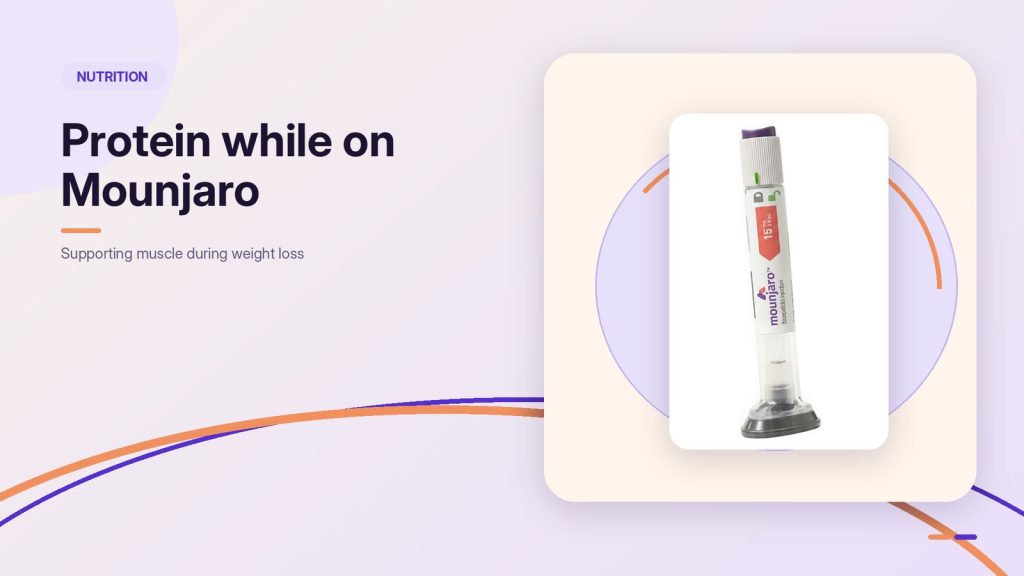
Eating enough protein is important on Mounjaro, Wegovy and other GLP-1 medications. Adequate protein and resistance training can help preserve muscle while you lose weight. A commonly suggested target during weight loss is 1.2–1.6 g of protein per kg of body weight daily, although the right amount depends on your health and body composition. At Endocare, our lifestyle coaches personalise your protein target using your body composition analysis.
- The 2025 joint advisory states that the recommended daily allowance of protein for the general adult population is 0.8 g per kg of body weight.
- For people living with obesity, the advisory notes that a target based on actual body weight can significantly overestimate protein needs.
- Eating protein-rich foods first in a meal can make it more likely that you eat enough protein when your appetite is low.
- The advisory states that increased protein intake alone is likely inadequate to preserve muscle without structured resistance training.
- The British Nutrition Foundation lists 32.0 g of protein per 100 g of grilled chicken breast and 7.6 g per 100 g of boiled red lentils.
- Our lifestyle coaches help you adjust your usual diet to include more protein, with practical swaps and recipes that suit the foods you enjoy.
Why protein matters on Mounjaro and other GLP-1 medications
Mounjaro and other GLP-1 medications reduce appetite, which helps create the calorie deficit needed for weight loss. With smaller meals, protein intake can fall alongside total calories.
In 2025, four US professional societies published a joint advisory on nutrition during GLP-1 treatment. They are the American College of Lifestyle Medicine, the American Society for Nutrition, the Obesity Medicine Association and The Obesity Society. The advisory states that sufficient dietary protein should be a priority to help preserve muscle mass and bone density.
Weight loss generally includes some lean tissue as well as body fat. Our article on muscle loss on GLP-1 medications describes why some lean tissue is lost and how your endocrinologist monitors it.
How much protein do you need each day?
The joint advisory sets out several reference points. For the general adult population, the recommended daily allowance is 0.8 g of protein per kg of body weight. The advisory notes that this reference value is currently under review. Higher targets of 1.2 to 1.6 g per kg a day have also been proposed during active weight loss.
If you live with obesity, calculating protein from your current weight may give you an unnecessarily high target. Your clinician can use an adjusted weight or body composition to set a more realistic goal. The joint advisory notes that it is unclear which body weight the targets should be based on: actual body weight, an adjusted or ideal body weight, or fat-free mass. For a person weighing 110 kg, a range based on actual body weight would come to 132 to 176 g of protein a day. The advisory states that using actual weight in this way can significantly overestimate protein requirements.
The advisory suggests that estimated fat-free mass may be the best basis, although there is still no consensus on the optimal approach. A target of 1.5 g per kg of fat-free mass a day is considered more accurate, but it requires body composition data.
At Endocare, body composition analysis is included free of charge at every consultation. Body composition analysis estimates body fat, muscle mass and body water. Repeated measurements help your endocrinologist understand how your body is changing beyond the number on the scale. Our lifestyle coaches use your results, your activity and your medical history to set a protein target that is appropriate for you.
If you have kidney disease, we recommend discussing any increase in protein with your doctor first.
Protein-rich foods and how much protein they contain
The British Nutrition Foundation lists the protein content of common foods per 100 g.
| Food | Protein per 100 g |
|---|---|
| Chicken breast, grilled, without skin | 32.0 g |
| Tuna, canned in brine | 24.9 g |
| Salmon, grilled | 24.6 g |
| Cod, baked | 23.9 g |
| Egg, whole, boiled | 14.1 g |
| Cottage cheese | 9.4 g |
| Tofu, steamed | 8.1 g |
| Red lentils, boiled | 7.6 g |
| Chickpeas, canned | 7.2 g |
| Plain Greek-style yoghurt | 5.7 g |
The figures are per 100 g of each food as prepared. The protein in a meal depends on the portion size.
Many familiar foods in the UAE are good sources of protein, including grilled fish, chicken, eggs, labneh, lentil soup and hummus made with chickpeas. These foods can help you reach your protein target, with the amount adjusted to your individual needs.
The joint advisory encourages plant sources such as beans, lentils and whole grains, along with dairy foods, seafood, eggs and lean poultry. It suggests eating red and processed meats in moderation. Our UAE food guide for Mounjaro, Wegovy and Foundayo covers vegetables, fibre and drinks as well as protein.
Eating enough protein when your appetite is low
The advisory notes that a reduced appetite or a change in taste can make adequate protein harder to achieve on a GLP-1 medication.
Start with protein. Our coaches focus on including a good source of protein at each meal, then look at portion sizes and drinks, which can contribute significantly to daily calorie intake.
The advisory suggests lower-volume, nutrient-dense protein foods, such as fish, eggs, Greek yoghurt and cottage cheese. Soups and softer foods can also be more appealing than heavier foods when your appetite is low.
Nausea can also make eating more difficult, particularly in the first weeks at a new dose. If you experience nausea or constipation, your endocrinologist can adjust the pace of dose increases and, where needed, prescribe medication to help manage these side effects. Our page on the side effects of Mounjaro has more detail.
Protein, resistance training and muscle
The advisory describes structured strength training, or a mix of strength and aerobic training, as well established to help preserve muscle during weight loss.
The advisory also notes that protein eaten in excess of the body’s needs for repair and growth can be converted to fat by the liver.
Our guide to strength training on a GLP-1 medication explains how to begin, including exercises you can do at home.
Frequently asked questions
Do you need protein on Mounjaro?
Yes. On Mounjaro, protein intake can fall along with total food intake. Protein supports muscle during weight loss, particularly alongside resistance training. Your lifestyle coach can help you plan meals that include enough protein.
Why do you need so much protein on tirzepatide?
You may not need more protein than before, but you may need to be more deliberate about eating it when your appetite is lower. The clinical reference StatPearls, available through the US National Library of Medicine, describes tirzepatide as reducing appetite and delaying stomach emptying. Eating less overall can make an adequate protein intake harder to reach. A 2025 joint advisory notes that targets above the general allowance of 0.8 g per kg a day have been proposed during weight loss.
Can low protein intake slow weight loss on Mounjaro?
Low protein intake is not a direct cause of a weight loss plateau on a GLP-1 medication. Protein supports body composition, including muscle preservation and fullness after meals. The common drivers of a plateau include the dose, missed injections, total food intake and sleep. Our article on not losing weight on Mounjaro covers each of these.
What is the best diet to follow while on Mounjaro?
There is no single best diet for everyone taking Mounjaro. Your calorie deficit and protein target can be calculated, but the plan also needs to include foods you enjoy and can realistically continue eating. A weight loss diet plan can provide useful structure, but it cannot adjust to your appetite from week to week. Our lifestyle coaches adjust your plan as your appetite and weight change.
Patients should not decide by themselves to start a GLP-1 medication. A doctor’s review is critical to ensure the treatment is safe and appropriate for the individual.
Monthly follow-up appointments can be held in person at the clinic or online. We recommend the first consultation in person, as it includes a physical examination and body composition analysis.
At our Dubai clinic, your endocrinologist will assess you, review your eating patterns and medical history, and discuss whether treatment is appropriate for you. You can book a weight loss consultation on +971 4 285 3885 or send us a message on WhatsApp.
