

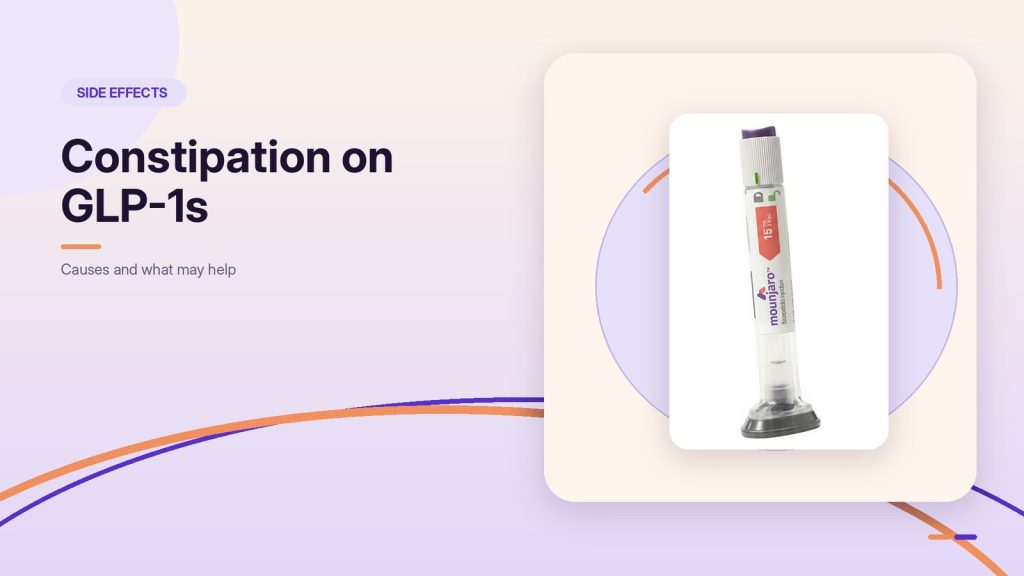
Constipation is a common side effect of GLP-1 medications such as Mounjaro, Wegovy, Ozempic and Foundayo, often while the dose is being increased. In the weight management trials in their labels, it affected 11% to 27% of adults, against 5% to 11% on placebo. More fibre, fluids and physical activity can help. Severe abdominal pain, vomiting, or being unable to pass stools or wind is different from ordinary constipation and needs urgent medical care.
- In the weight management trials in the tirzepatide label, constipation affected 11% to 17% of adults, depending on the dose, compared with 5% on placebo.
- The Foundayo label reports constipation in 20% to 27% of adults in its weight management trials, depending on the dose, against 9% on placebo.
- GLP-1 medications can affect digestive movement, while eating less fibre and drinking less fluid may also contribute to constipation.
- The NHS recommends gradually increasing fibre, drinking plenty of fluids and staying active, and suggests speaking to a pharmacist if these changes do not help.
- Laxatives are generally used for a short time only, and a pharmacist or doctor can advise which type is suitable for you.
- Severe abdominal pain, vomiting, or being unable to pass stools or wind can be signs of a bowel obstruction, which needs emergency care. These symptoms are different from ordinary constipation, and fibre or laxatives are not the answer if a blockage is possible.
How common is constipation on GLP-1 medications?
Constipation appears among the common side effects in the labels of Mounjaro (tirzepatide), Wegovy (semaglutide), Ozempic (semaglutide) and Foundayo (orforglipron). These are all GLP-1 medications. The Wegovy pill (oral semaglutide 25 mg) is the tablet form of Wegovy. Ozempic is approved for type 2 diabetes.
In the weight management trials described in the FDA label for tirzepatide, 17%, 14% and 11% of adults taking 5 mg, 10 mg and 15 mg reported constipation. The figure was 5% among those taking a placebo. In the US, tirzepatide for weight management is marketed as Zepbound.
The other figures come from the Mounjaro label, the Wegovy label, the Ozempic prescribing information and the Foundayo label. The Wegovy pill figure comes from its UK product information. The figures below come from separate clinical trials rather than a direct head-to-head study, so they should be viewed as a general comparison rather than a direct ranking.
| Medication and trial population | Constipation on the medication | Constipation on placebo |
|---|---|---|
| Mounjaro, weight management | 17% (5 mg), 14% (10 mg), 11% (15 mg) | 5% |
| Mounjaro, type 2 diabetes | 6% (5 mg and 10 mg), 7% (15 mg) | 1% |
| Wegovy injection 2.4 mg, weight management | 24% | 11% |
| Wegovy pill, weight management | 20.1% | 9.8% |
| Ozempic, type 2 diabetes | 5% (0.5 mg), 3.1% (1 mg) | 1.5% |
| Foundayo, weight management | 20% (5.5 mg), 27% (9 mg), 24% (17.2 mg) | 9% |
The UK product information for the Wegovy pill describes constipation as mild to moderate and mainly seen while the dose is being increased. It also notes that constipation lasted longer than the other digestive side effects.
Our pages on Mounjaro side effects, Wegovy side effects, Ozempic side effects and Foundayo side effects cover the other side effects of each medication.
Why GLP-1 medications can cause constipation
GLP-1 medications slow the movement of food out of the stomach. StatPearls, a clinical reference from the US National Library of Medicine, lists delayed stomach emptying among their effects. This slower digestion may contribute to constipation.
Eating less can also play a part. Smaller meals can contain less fibre, and people may drink less fluid when their appetite falls. The US National Institute of Diabetes and Digestive and Kidney Diseases (NIDDK) states that adults should get 22 to 34 grams of fibre a day, depending on age and sex.
Other medications can also cause constipation, and the NHS names opioid painkillers as an example. We recommend telling your endocrinologist about every medication you take.
What can help with constipation on a GLP-1 medication
The NHS recommends increasing the fibre in your diet gradually. It suggests adding wheat bran, oats or linseed, and eating fruits that contain sorbitol, such as apples, apricots, grapes, raspberries and strawberries.
The NHS also advises drinking plenty of water and other fluids and avoiding alcohol. The NIDDK adds that fluids are particularly important when you eat more fibre or take a fibre supplement.
Physical activity can help. The NHS notes that a daily walk or run can help bowel movements become more regular. Our guide to exercise on weight loss injections covers ways to stay active during treatment.
A regular routine can also help. The NHS advises keeping to a regular time and place for the toilet, allowing plenty of time, and not delaying when you feel the urge to go.
Endocare’s lifestyle coaches can help you include enough fibre and fluid when your meals are smaller. Our food guide for Mounjaro, Wegovy and Foundayo includes meal ideas.
Laxatives and adjusting the dose
The NHS advises speaking to a pharmacist if diet and lifestyle changes are not helping. A pharmacist can suggest a suitable laxative. The NHS notes that most laxatives work within three days and should only be used for a short time.
The NIDDK describes several types of laxative available without a prescription. They include fibre supplements, osmotic laxatives, stool softeners, lubricants and stimulant laxatives. It advises using stimulant laxatives only if constipation is severe or other treatments have not worked.
We recommend checking with your pharmacist or endocrinologist before taking a laxative, so that the type is appropriate for your medication and medical history.
If you experience nausea or constipation, your endocrinologist can adjust the pace of dose increases and, where needed, prescribe medication to help manage these side effects. Our Mounjaro dosage guide sets out the dose steps.
When constipation needs urgent care
The Mounjaro, Wegovy and Foundayo labels list reports, since approval, of ileus, intestinal obstruction and severe constipation with faecal impaction. Ileus is a condition in which the bowel stops moving its contents along. Faecal impaction is hard stool that becomes stuck in the bowel.
Healthdirect, the Australian Government’s health information service, lists cramping abdominal pain, being unable to pass stools or wind, vomiting and bloating among the symptoms of a bowel obstruction. These symptoms are different from ordinary constipation. If a blockage is possible, more fibre or a laxative is not the answer, and we recommend seeking urgent medical care straight away.
The NHS advice on stomach pain calls for emergency care if you have stomach pain and any of the following:
- the pain started suddenly and is severe
- you are vomiting blood, or your vomit is green or looks like ground coffee
- you are passing a lot of blood from your bottom, or your stools are black and sticky
- you cannot pass any stools or wind
Call an ambulance on 998. The UAE government’s list of emergency numbers gives 998 for an ambulance.
The MHRA also advises urgent help for severe stomach pain that spreads to the back and does not go away. This can be a sign of pancreatitis, inflammation of the pancreas. Being unable to keep fluids down and signs of a serious allergic reaction, such as swelling of the face or difficulty breathing, also need urgent medical care.
The NHS advises seeing a doctor if constipation is not improving with treatment, if there is blood in your stools, or if you have abdominal pain or regular bloating. If you are being treated at Endocare, contact your endocrinologist in these situations.
Frequently asked questions
How often should you have a bowel movement on Mounjaro?
There is no set number that applies to everyone. The NHS suggests constipation is likely if you have had fewer than three bowel movements in the last week, or fewer than usual. Hard, dry or lumpy stools, straining and a feeling that the bowel has not fully emptied are other signs.
How long does constipation last on Mounjaro?
Side effects such as nausea or constipation can be particularly pronounced in the first few days at a new dose. They often improve as your body adjusts, although some symptoms last longer. The Mounjaro label does not give a set duration. If constipation continues or becomes severe, contact your endocrinologist.
Should I stop Mounjaro if I am constipated?
The NHS advises speaking to a doctor before stopping any prescribed medication. Constipation can often be managed with fibre, fluids, activity and, where needed, a laxative. Your endocrinologist can also review the pace of your dose increases.
Can Foundayo cause constipation?
Yes. In the weight management trials in its label, constipation was reported by 20% to 27% of adults taking Foundayo, depending on the dose, compared with 9% of those taking a placebo. The advice on fibre, fluids and activity applies in the same way to a daily tablet.
Patients should not decide by themselves to start a GLP-1 medication. A doctor’s review is critical to ensure the treatment is safe and appropriate for the individual.
Monthly follow-up appointments can be held in person at the clinic or online. We recommend the first consultation in person, as it includes a physical examination and body composition analysis.
At our Dubai clinic, your endocrinologist will assess you, review your symptoms, diet and medication, and adjust your treatment plan where needed. You can book a weight loss consultation on +971 4 285 3885 or send us a message on WhatsApp.
