

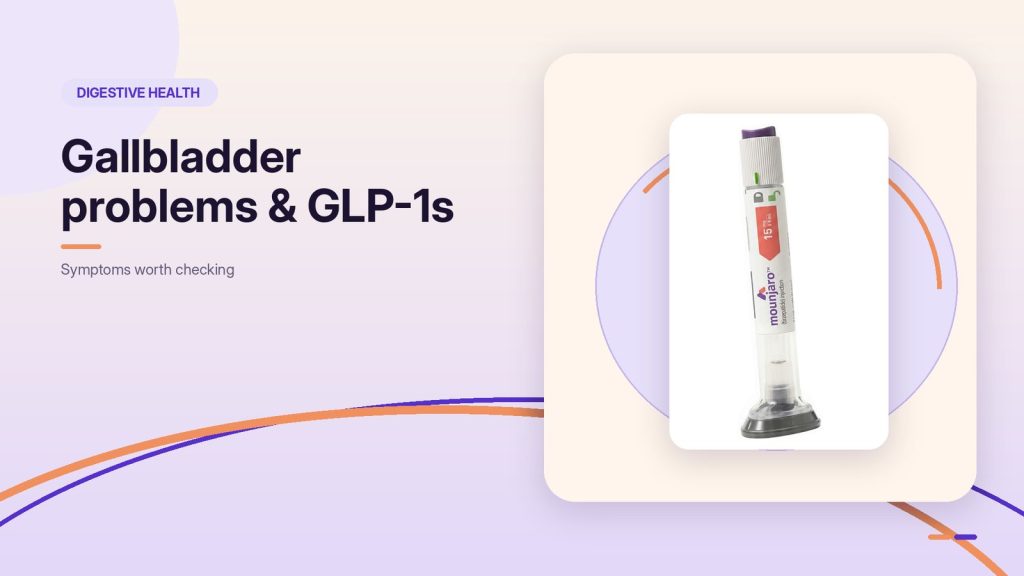
Mounjaro and other GLP-1 medications can increase the risk of certain gallbladder problems, mainly gallstones and inflammation of the gallbladder. In the tirzepatide weight management trials, gallstones affected 1.1% of adults and gallbladder inflammation 0.7%, against 1% and 0.2% on placebo. Losing weight quickly is a known risk factor for gallstones. Seek urgent medical care for severe or persistent abdominal pain, fever or yellowing of the skin or eyes.
- Gallstones are small stones that form in the gallbladder. The NHS notes that most people who have gallstones do not get symptoms.
- The Wegovy label reports gallstones in 1.6% of adults on the 2.4 mg injection, compared with 0.7% of adults on placebo.
- The NHS lists losing weight quickly, being a woman, being over 40 and living with obesity among the factors that make gallstones more likely.
- Very rapid weight loss may raise the chance of gallstones. As general guidance, the NIDDK suggests aiming first for a loss of 5% to 10% of starting weight over six months.
- Your endocrinologist asks about gallbladder history before prescribing and reviews the pace of your weight loss at each monthly follow-up.
- The NHS advises emergency care for sudden severe abdominal pain, pain spreading to the back with vomiting, a very high temperature or yellowing of the skin or eyes.
How common are gallbladder problems on GLP-1 medications?
Gallbladder problems appear in the warnings and precautions section of the prescribing information for Mounjaro (tirzepatide), Foundayo (orforglipron), Ozempic (semaglutide) and Wegovy (semaglutide). Each of these GLP-1 medications lists gallstones, and most also list cholecystitis, an inflammation of the gallbladder.
The Wegovy pill (oral semaglutide 25 mg), a once-daily tablet, has separate figures in its UK product information. The remaining figures are from US Food and Drug Administration (FDA) labels. These cover tirzepatide for weight management, Mounjaro for type 2 diabetes, the Wegovy injection, Ozempic for type 2 diabetes and Foundayo for weight management.
In the US, tirzepatide for weight management carries the brand name Zepbound. The figures below come from separate clinical trials rather than a direct head-to-head study, so they should be viewed as a general comparison rather than a direct ranking.
| Medication and trial population | Gallstones | Gallbladder inflammation |
|---|---|---|
| Mounjaro, weight management | 1.1% (placebo 1%) | 0.7% (placebo 0.2%) |
| Wegovy injection 2.4 mg, weight management | 1.6% (placebo 0.7%) | 0.6% (placebo 0.2%) |
| Wegovy pill, weight management | 2.5% (placebo 1%) | 0% (placebo 0%) |
| Ozempic, type 2 diabetes | 1.5% (0.5 mg), 0.4% (1 mg); none on placebo | No separate figure |
| Foundayo, weight management | 1% (placebo 0.7%) | 0.4% (placebo 0.3%) |
Gallstones affected fewer than 3 in 100 adults in every trial. In each case, they were reported more often on the medication than on placebo.
Among adults with type 2 diabetes in the Mounjaro trials, acute gallbladder events, including gallstones and gallbladder removal, were reported in 0.6%. None were reported on placebo.
Why GLP-1 medications can raise the risk of gallstones
Losing weight quickly is a recognised risk factor for gallstones. The US National Institute of Diabetes and Digestive and Kidney Diseases (NIDDK) notes that losing weight very quickly may raise the chance of forming them. The tirzepatide label states that acute gallbladder events were associated with weight reduction.
The Wegovy label states that substantial or rapid weight loss can increase the risk of gallstones. It adds that gallbladder disease remained more common on Wegovy than on placebo after accounting for the amount of weight lost.
The UK National Health Service (NHS) advice on gallstones also lists being over 40, being a woman and living with obesity. Conditions such as diabetes or Crohn’s disease are among the other risk factors it names. Our post on side effects in women covers other considerations for women taking these medications.
Symptoms of gallstones and gallbladder inflammation
Gallstones often cause no symptoms. Pain can occur when a stone blocks one of the ducts that carry bile from the gallbladder. This pain can be severe and constant, last from 30 minutes to several hours, and be felt in the middle of the abdomen or under the right ribs.
The pain can come with feeling or being sick. The NIDDK adds that gallbladder attacks often follow heavy meals and tend to occur in the evening or during the night.
When a stone blocks the main opening of the gallbladder, the gallbladder can become inflamed. The NHS advice on acute cholecystitis describes its main symptom as a sudden, sharp pain in the upper right abdomen. Other symptoms can include a high temperature, sickness, sweating or loss of appetite.
A stone blocking the bile duct can also cause jaundice. Signs include yellowing of the skin or the whites of the eyes, itchy skin, darker urine and paler stools.
Burning pain in the middle of the chest after a meal is more typical of heartburn. If you are unsure which you have, your endocrinologist can assess your symptoms.
When gallbladder pain needs urgent or emergency care
Some gallbladder symptoms need prompt medical attention:
- severe or persistent abdominal pain: seek medical advice immediately
- pain with nausea and vomiting: seek medical advice immediately
- fever or chills with abdominal pain: seek medical advice immediately
- tea-coloured urine or pale stools: seek medical advice immediately
These signs come from the NHS and the NIDDK guidance on gallbladder attacks. Endocare patients should also let their endocrinologist know.
The NHS advises emergency care for any of the following:
- sudden, severe abdominal pain
- pain spreading from the abdomen to the back, with vomiting
- a very high temperature, or feeling hot, cold or shivery
- yellowing of the skin or the whites of the eyes
Call an ambulance on 998. Pain that spreads from the upper abdomen to the back can also be a sign of pancreatitis, which our page on Mounjaro side effects covers. Being unable to keep fluids down and signs of a serious allergic reaction, such as swelling of the face or difficulty breathing, also need urgent medical care.
How to lower the risk of gallstones during treatment
The NIDDK reports that experts recommend beginning with a weight loss of 5% to 10% of your starting weight over six months. This is general guidance. The pace that is appropriate for you depends on your starting weight, your medical history and your treatment plan.
Your endocrinologist sets the pace of your dose increases with you and reviews how quickly your weight is falling at each monthly follow-up. Our Wegovy dosage guide shows the dose steps for the Wegovy injection. Our guide to how many kilos you can lose in a month discusses a realistic pace.
The NHS also names a diet high in fat and low in fibre as a risk factor. Our lifestyle coaches can help you plan balanced meals with enough fibre.
The NIDDK recommends at least 150 minutes a week of moderate-intensity physical activity. Our guide to staying active on weight loss injections suggests where to start.
Can you take Mounjaro after gallbladder removal?
Lilly, the manufacturer of Mounjaro, notes in its medical information that neither gallbladder disease nor a previous removal appears among the contraindications for tirzepatide. It adds that people in these groups were not explicitly excluded from the trials, and that no separate analysis of them was carried out.
The labels for Wegovy, Ozempic and Foundayo list gallbladder disease among their warnings and precautions. Your endocrinologist reviews your gallbladder history, including any removal, before prescribing.
After the operation, the NHS guidance on recovery advises a normal, healthy diet. It notes that small meals may be easier for the first few days.
Frequently asked questions
Does Ozempic cause gallstones?
Gallstones were reported in a small number of adults in the Ozempic trials, all of whom had type 2 diabetes. They affected 1.5% of those taking 0.5 mg and 0.4% of those taking 1 mg, with none on placebo. Our page on Ozempic side effects covers its other warnings.
Does Foundayo affect the gallbladder?
It can. In the Foundayo weight management trials, gallstones were reported in 1% of adults and acute cholecystitis in 0.4%, compared with 0.7% and 0.3% on placebo. Our page on Foundayo side effects lists its other side effects.
Are women more likely to get gallstones?
Yes. The NHS lists being a woman among the risk factors for gallstones. The Mounjaro, Wegovy and Foundayo labels give a single gallbladder figure covering women and men together. Women considering treatment can discuss their own risk with their endocrinologist.
Should I stop Mounjaro if I have gallstones?
Speak to your endocrinologist before making any change to your treatment. The Mounjaro label advises tests of the gallbladder and appropriate follow-up if gallstones are suspected. The NHS notes that gallstones may not need treatment if they cause no symptoms. Your endocrinologist can then decide with you whether to continue, pause or adjust treatment.
Patients should not decide by themselves to start a GLP-1 medication. A doctor’s review is critical to ensure the treatment is safe and appropriate for the individual.
Monthly follow-up appointments can be held in person at the clinic or online. We recommend the first consultation in person, as it includes a physical examination and body composition analysis.
At our Dubai clinic, your endocrinologist will assess you, ask about any history of gallstones or gallbladder surgery, and agree on a pace of weight loss that is appropriate for you. You can book a weight loss consultation on +971 4 285 3885 or send us a message on WhatsApp.
