

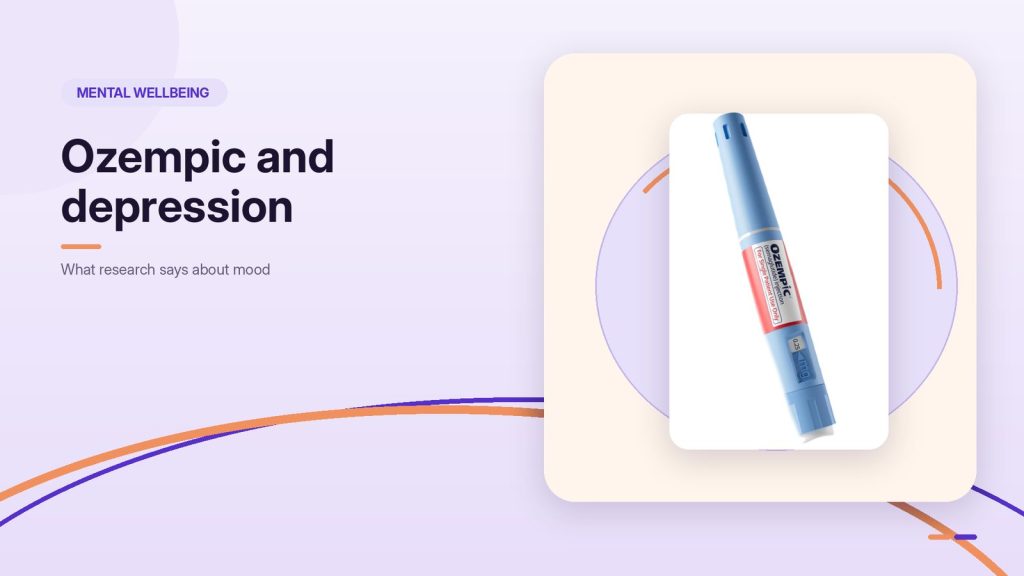
Large safety reviews have not found an increased risk of depression with GLP-1 medications, but tell your doctor about any change in mood. In January 2026, the US Food and Drug Administration (FDA) reported on a review of 91 clinical trials. It found no increased risk of suicidal thoughts or of psychiatric effects such as depression and anxiety. The European Medicines Agency reached a similar conclusion on suicidal thoughts in 2024.
- In January 2026, the FDA asked the makers of Wegovy, Zepbound and Saxenda to remove the warning on suicidal thoughts and behaviour from their prescribing information.
- The FDA’s review of 91 placebo-controlled trials, with 107,910 patients, did not show an increased risk of suicidal thoughts or of anxiety, depression, irritability or psychosis.
- A separate FDA study of insurance claims, comparing more than a million new users of GLP-1 medications with users of SGLT2 inhibitors, found no increased risk of intentional self-harm.
- In April 2024, the European Medicines Agency’s safety committee concluded that the available evidence does not support a causal link between these medications and suicidal thoughts.
- The NHS lists depression among the problems that obesity can cause, and among the conditions that can make it harder to stay a healthy weight.
- If your mood changes during treatment, your endocrinologist can review possible causes with you and discuss whether further support is appropriate.
- If you have thoughts of harming yourself and feel you may act on them, call an ambulance on 998.
Can Ozempic or Mounjaro cause depression?
Low mood is a common concern for people starting a GLP-1 medication. Regulators in the United States and Europe have reviewed the question in detail.
The GLP-1 medications used for weight management include Mounjaro, Wegovy and Foundayo. Ozempic is approved for type 2 diabetes, and Wegovy is the semaglutide medication approved for weight management. At Endocare, Ozempic is considered for weight management only in patients with type 2 diabetes or prediabetes. Ozempic is not approved for weight management or for prediabetes, so using it for weight management outside the treatment of type 2 diabetes, including in prediabetes, is off-label.
Based on the evidence it reviewed, the FDA has concluded that the data do not support a causal relationship between GLP-1 medications and suicidal thoughts or behaviour. Mood can still change during weight loss treatment for other reasons. Any new or worsening low mood is worth discussing with your doctor.
What the FDA and the European Medicines Agency reviewed
Until 2026, the US prescribing information for three weight management medications carried a warning about suicidal thoughts and behaviour. The three medications were Wegovy, Zepbound and Saxenda. Zepbound is the US brand of tirzepatide for weight management. Saxenda contains liraglutide.
The US Food and Drug Administration (FDA) pooled the results of 91 placebo-controlled clinical trials, which included 107,910 patients. It found no increased risk of suicidal thoughts or behaviour. It also found no increased risk of other relevant psychiatric effects, which the FDA lists as anxiety, depression, irritability and psychosis.
A second FDA analysis used health insurance claims from more than 1.1 million new users of GLP-1 medications. Their risk of intentional self-harm was compared with that of new users of SGLT2 inhibitors, another class of medication for type 2 diabetes. No increased risk was found.
In February 2026, the US prescribing information for Wegovy was revised to list the warning as removed.
In Europe, the European Medicines Agency’s safety committee began a review in July 2023, following reports of suicidal and self-injurious thoughts. In April 2024, the committee concluded that the available evidence does not support a causal association between these medications and suicidal or self-injurious thoughts and actions. The review covered several GLP-1 medications, including semaglutide, the active ingredient in Ozempic and Wegovy. The committee did not consider an update to the product information necessary.
Why mood can change during weight loss treatment
The NHS describes a link between weight and mood in both directions. Obesity can lead to mental health problems, including depression. Depression, in turn, can make it harder to stay a healthy weight.
Other factors can also affect mood during treatment. Poor sleep, stress and changes in daily routine can all influence how you feel. Some medical conditions, such as an underactive thyroid, can also cause low mood.
Side effects can play a part, particularly in the first weeks at a new dose. If you experience nausea or constipation, your endocrinologist can adjust the pace of dose increases and, where needed, prescribe medication to help manage these side effects. Our page on the side effects of Mounjaro describes the most common ones.
Our lifestyle coaches support patients with nutrition, physical activity, sleep and stress management. Endocare’s doctors are always available to support patients with advice.
When to speak to your doctor about your mood
New or worsening low mood, anxiety or changes in behaviour during treatment should be discussed with your doctor. This includes a loss of interest in things you normally enjoy, or thoughts that life is not worth living.
Your endocrinologist will ask about your symptoms, sleep, other medications and medical history. They can also discuss whether support from a mental health professional may help.
We do not recommend stopping a prescribed medication on your own because of a change in mood. Your doctor will help you decide whether any change to your treatment is appropriate.
Getting urgent help in the UAE
If you are in immediate danger, or you think you may act on thoughts of harming yourself, call an ambulance on 998. You can also go to the nearest hospital emergency department.
If someone you know is at risk, stay with them and call 998. The UAE government lists 998 as the number for an ambulance and 999 for the police.
Frequently asked questions
Does Ozempic make you feel depressed?
The FDA’s review of 91 placebo-controlled trials of GLP-1 medications did not show an increased risk of depression. Some people may still notice changes in mood during treatment, and the reasons can vary. We recommend raising any change in mood with your doctor.
Can Mounjaro cause anxiety?
In placebo-controlled trials of GLP-1 medications, the FDA found no increased risk of anxiety. Its January 2026 decision included Zepbound, which contains tirzepatide, the active ingredient in Mounjaro. Anxiety can have many causes, including stress, poor sleep and other health conditions. If you notice new anxiety, speak to your doctor rather than assuming the injection is, or is not, the cause.
Should I stop my medication if my mood changes?
Not without speaking to your doctor first. The FDA advises continuing your medication as prescribed while you tell your doctor about any new or worsening depression or unusual mood changes. If you have thoughts of harming yourself, seek urgent help by calling an ambulance on 998.
Does Ozempic cause mood swings?
Irritability was one of the psychiatric effects assessed in the FDA’s review, which found no increased risk with GLP-1 medications. Changes in appetite, sleep and routine during weight loss can affect how you feel from day to day. Marked changes in mood can be discussed at your next follow-up appointment, or sooner if they are severe.
Patients should not decide by themselves to start a GLP-1 medication. A doctor’s review is critical to ensure the treatment is safe and appropriate for the individual.
Monthly follow-up appointments can be held in person at the clinic or online. We recommend the first consultation in person, as it includes a physical examination and body composition analysis.
At our Dubai clinic, your endocrinologist will assess you, review your treatment and your wellbeing, and discuss whether any changes are appropriate for you. You can book a weight loss consultation on +971 4 285 3885 or send us a message on WhatsApp.
