

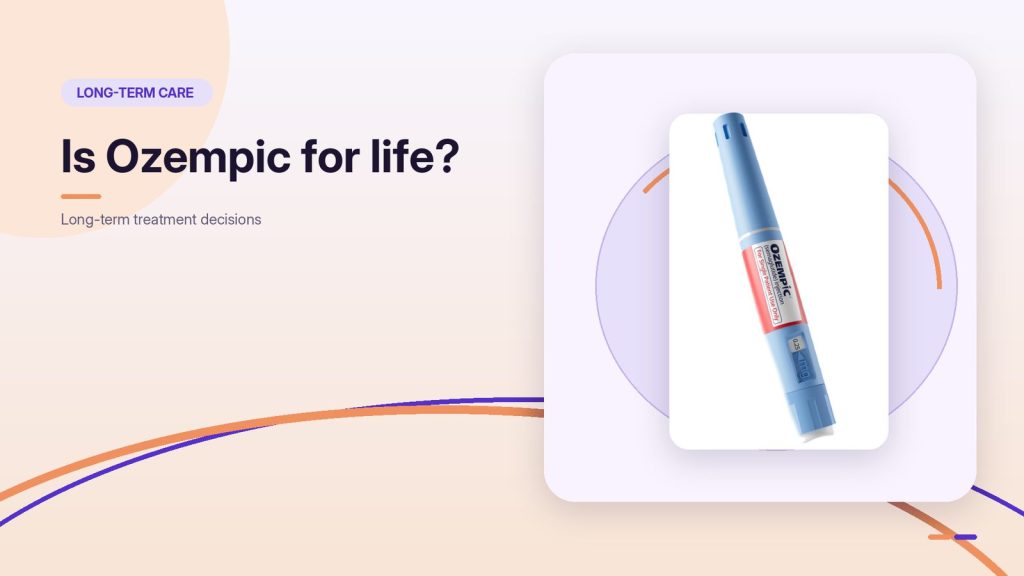
The World Health Organization describes obesity as a chronic disease, and treatment with Ozempic, Wegovy or Mounjaro is often long-term. They are not necessarily taken for life, and no fixed duration applies to every patient. The STEP 1 trial extension followed a subset of participants for a year after treatment stopped. Those who had taken semaglutide regained around two-thirds of the weight they had lost, on average. Your endocrinologist will review your response, dose and goals at each follow-up.
- In a guideline published in December 2025, the World Health Organization supports GLP-1 medications as one component of chronic obesity care in adults.
- The US prescribing information for Wegovy covers both reducing excess body weight and maintaining the weight reduction long term.
- In a one-year follow-up of 228 adults who stopped semaglutide 2.4 mg in the STEP 1 trial, most improvements in heart and metabolic risk factors moved back towards their starting levels.
- The prescribing information sets the doses for continued treatment, and the first doses of each medication are steps in the dose escalation.
- When it is time to come off the medication, your endocrinologist will help plan whether and how to stop treatment and what support you will need afterwards.
- If your weight starts rising after treatment stops, contact your endocrinologist early. They can review your lifestyle plan and whether further treatment is appropriate.
Is Ozempic, Wegovy or Mounjaro taken for life?
How long you take a GLP-1 medication depends on why it was prescribed, how you respond and the goals you agree with your endocrinologist.
Ozempic is approved for type 2 diabetes, and Wegovy is the semaglutide medication approved for weight management. At Endocare, Ozempic is considered for weight management only in patients with type 2 diabetes or prediabetes. Ozempic is not approved for weight management or for prediabetes, so using it for weight management outside the treatment of type 2 diabetes, including in prediabetes, is off-label. Mounjaro contains tirzepatide, a medication that acts on both GIP and GLP-1 receptors.
For weight management, medication is one part of treatment alongside nutrition, physical activity and regular review. Treatment can continue for several years in some patients. Some people may stop after an individualised review, with a plan to monitor weight and health.
Why obesity is treated as a long-term condition
Obesity is described by the World Health Organization (WHO) as a chronic disease, which is a condition that needs care over a long period. In December 2025, the WHO set out its position on GLP-1 medications in a guideline on obesity care. The guideline supports the safe, equitable and appropriate inclusion of GLP-1 medications as one component of multimodal care for adults.
Multimodal care combines treatments such as medication with nutrition, physical activity and behavioural support. Our lifestyle coaches can continue to help with eating habits, activity, sleep and stress throughout long-term treatment.
The US prescribing information for Wegovy lists two aims for weight management: to reduce excess body weight and to maintain the weight reduction long term.
Harvard Health Publishing notes that people can feel hungry sooner after meals once a GLP-1 medication is stopped. It adds that thoughts about food can increase.
What happens to weight after treatment stops?
In STEP 1, a Phase 3 clinical trial in adults with obesity or overweight, patients taking the Wegovy injection at 2.4 mg lost an average of around 15% of their total body weight over 68 weeks.
In an extension of the STEP 1 trial, 327 participants were followed for a further year after treatment stopped at week 68. Those in the extension who had taken semaglutide had lost 17.3% of their body weight on average by week 68. By week 120, they had regained 11.6 percentage points, around two-thirds of the weight they had lost. Improvements in cardiometabolic risk factors, which relate to heart and metabolic health, mostly moved back towards their starting levels as well.
In the extension, the medication and the lifestyle programme both stopped at week 68. The study authors concluded that the findings confirm obesity as a chronic condition. They added that ongoing treatment may be needed to maintain the improvements in weight and health.
The British Heart Foundation has reported on SURMOUNT-4, a clinical trial of tirzepatide, the active ingredient in Mounjaro. After losing weight on tirzepatide, participants either continued the medication or switched to a placebo for a year. In an analysis of the SURMOUNT-4 trial, 82% of participants who stopped tirzepatide regained at least a quarter of the weight they had lost. Around 24% regained three quarters or more, and 9% regained all of it.
Participants in SURMOUNT-4 continued to receive lifestyle counselling throughout the trial, including after the switch to placebo. The figures are averages and proportions, and individual results varied.
Our article on stopping Mounjaro, Ozempic or Foundayo describes how appetite and weight can change once treatment ends.
Staying on a maintenance dose
A maintenance dose is the dose that helps maintain your results once you have reached your target weight and achieved the symptom control you were treated for.
The dose is reviewed with your endocrinologist at each monthly follow-up. The first doses of each medication are steps in the dose escalation, not maintenance doses. The prescribing information sets the doses for continued treatment, and your maintenance dose is not necessarily the highest one.
Staying on a maintenance dose is one way to continue treatment once your weight is stable. Our article on the GLP-1 maintenance dose explains how your endocrinologist chooses it.
When it is time to come off the medication
Your endocrinologist will help plan whether and how to stop treatment and what support you will need afterwards. No universal evidence-based schedule for stopping a GLP-1 medication exists. For some patients, the plan reduces the dose in stages agreed at follow-up appointments. A gradual reduction in dose is an individual clinical approach, not a proven standard of care, and it has not been shown to prevent weight regain.
If you take a GLP-1 medication for type 2 diabetes, stopping it can worsen blood sugar control. Your endocrinologist will plan an alternative treatment for your blood sugar with you before any change.
Our guides to coming off a weight loss injection safely and keeping the weight off after a GLP-1 medication cover each stage in more detail.
Frequently asked questions
Can you ever stop taking Ozempic?
Yes. Whether and when to stop depends on why your doctor prescribed Ozempic and how you have responded to it. If you take it for type 2 diabetes, your doctor will plan how your blood sugar will be managed before you stop. For weight management, your endocrinologist will help plan whether and how to stop and what support you will need afterwards.
How long can you take Wegovy?
There is no set end date for Wegovy treatment. Long-term use is part of its approved use in the US. Long-term treatment still needs regular medical review. Your endocrinologist will review your response and any side effects at each follow-up, and arrange blood tests when they are due.
How long do you take Mounjaro?
The US prescribing information for Mounjaro sets out how to start and increase the dose, but it gives no fixed length of treatment. Your endocrinologist will increase the dose in steps and review at each monthly follow-up whether to continue. Treatment can continue for as long as it remains safe and effective for you.
Does long-term treatment mean taking the highest dose?
No. The FDA-approved maintenance doses of tirzepatide are 5 mg, 10 mg and 15 mg once weekly, with 5 mg being the lowest maintenance dose. If your weight is stable on 5 mg or 10 mg, your endocrinologist may keep you on that dose.
Patients should not decide by themselves to start a GLP-1 medication. A doctor’s review is critical to ensure the treatment is safe and appropriate for the individual.
Monthly follow-up appointments can be held in person at the clinic or online. We recommend the first consultation in person, as it includes a physical examination and body composition analysis.
At our Dubai clinic, your endocrinologist will assess you, review your goals and discuss how long treatment may be appropriate for you. You can book a weight loss consultation on +971 4 285 3885 or send us a message on WhatsApp.
